Charlotte Mason College in the 1940s
Published on: 25/02/2026
Tagged:
By Joanne Lusher
The college by the 1940s
By the 1940s, the college was officially named ‘Charlotte Mason College’, having changed names in 1938 from the ‘House of Education’. The name change was in honour of its founder, Charlotte Maria Shaw Mason, who died only 15 years earlier in 1923.
Attached to the college was a practising school which took in pupils from the local area. The Practising School began in the Beehive, a former smoking and billiard room. By the 1940,s the school had expanded over the road from the main campus into two buildings called Fairfield and Springfield, which are still part of the campus today.
After Miss Mason’s death, Miss Parish took over the House of Education as the principal. In 1934, Essex Cholmondeley succeeded Miss Parish as principal until 1937, when Joyce van Straubenzee was appointed.
A private institution for ladies only, the college was a safe haven during the war years and saw an increase in students during this time. In 1945, the course was extended to three years and they began to take in boarders at Fairfield and the Annexe. By 1945, provisional government recognition had linked Charlotte Mason College to Manchester University School of Education.
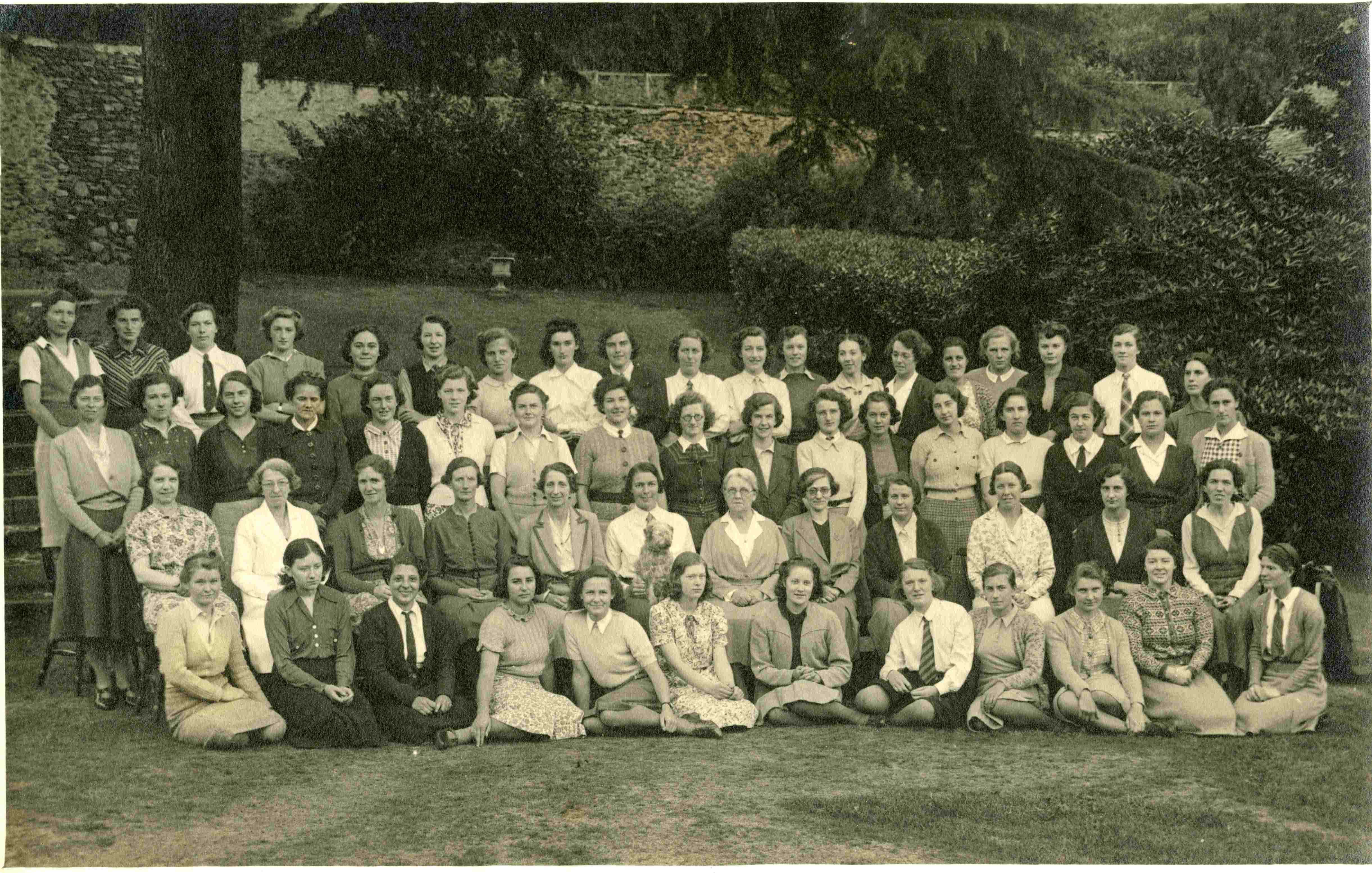
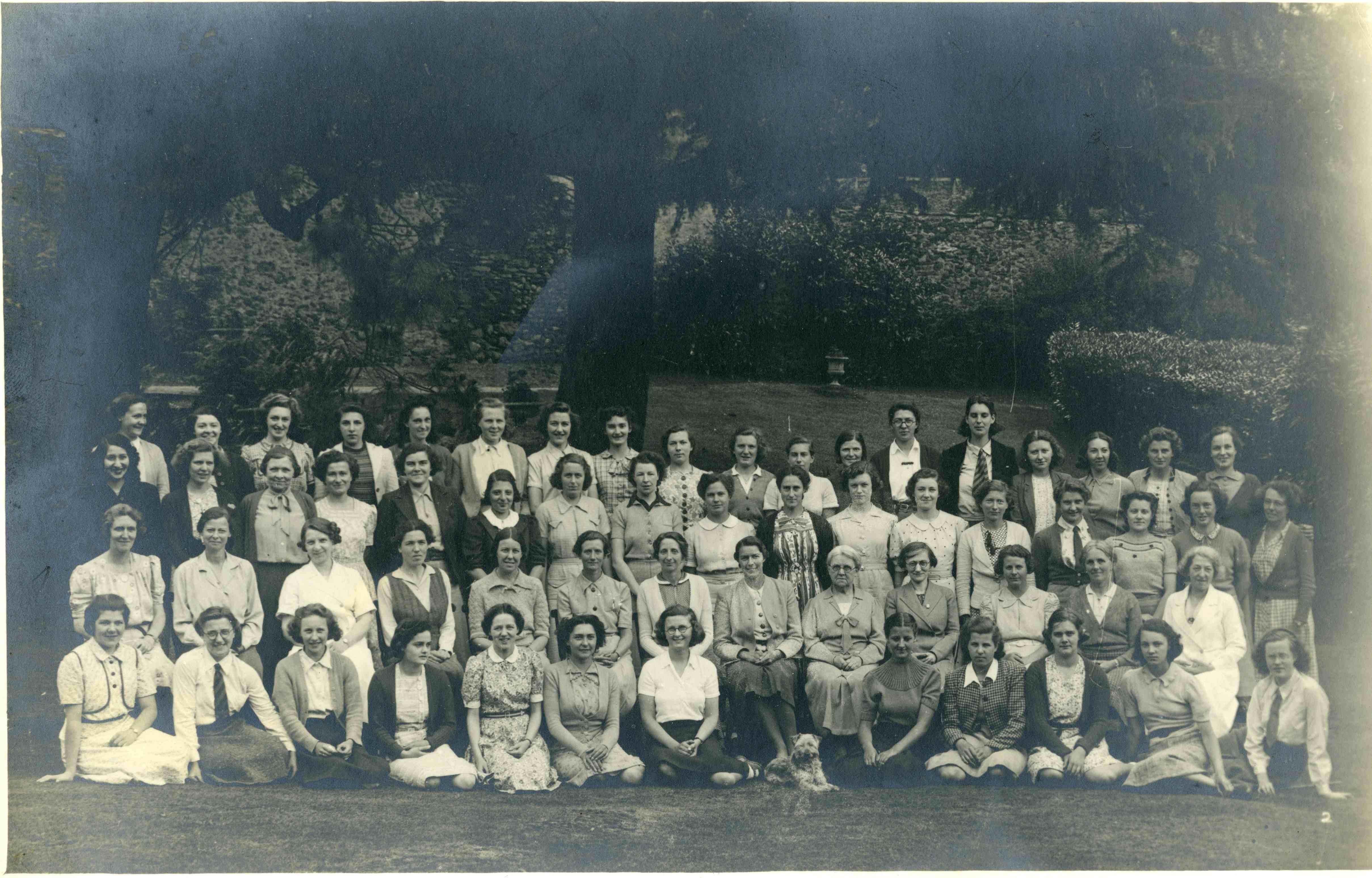
Our photograph below shows the staff and students of Charlotte Mason College in 1940 posing on campus on the lawn by the Wordsworth steps. Scale How (or its former name Greenbank) used to be owned by Dorothy Harrison, a relative of William Wordsworth, who was a frequent visitor to the house. The steps are named after William Wordsworth due to this connection. The steps are no longer part of the campus today, but a plaque shows the site where they once stood.
It was a college tradition for each intake of students to pose by the Wordsworth steps each year for their official photograph.
Staff members Miss Lydia Joss and Miss Marsden can be seen in the third row back, the two ladies on the left.
The second row from right to left shows staff members: Miss Whittle, Miss Hanson, Miss Plumtre, Miss Kathleen Minn, Mlle Chaudouet, Miss Kitchen, Miss J. Van Straubenzee (Principal), Miss M. Hardcastle (Vice-Principal), Miss Moffatt, Miss K. Hugman, Miss Stelering, Miss Braham.
Student memories
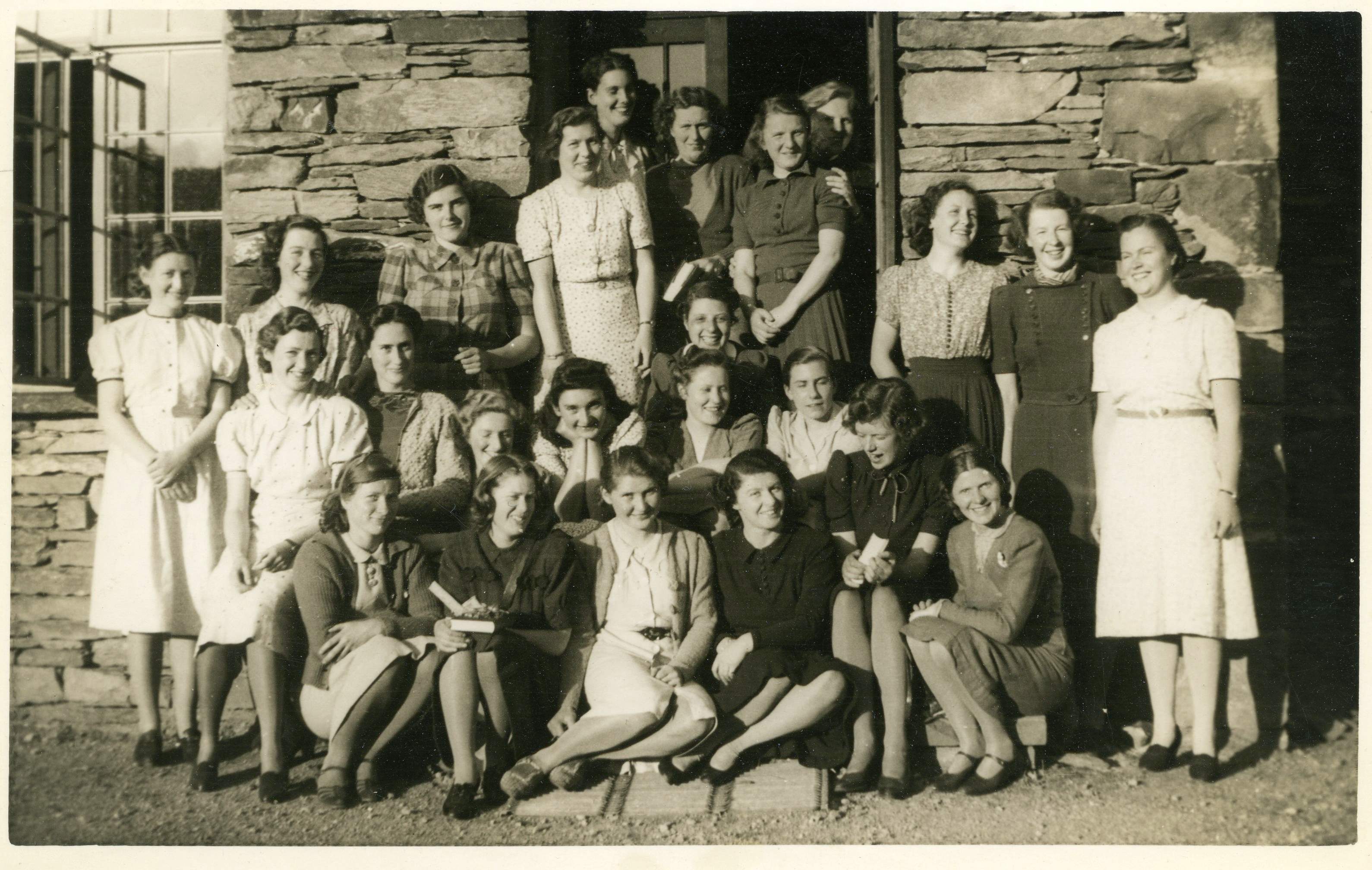
Born in 1921 and originally from Wolverhampton, Ann Hawkins (Findlay) graduated in 1940. We were lucky enough to meet her when she returned back to Ambleside as part of a reunion in 2014. Ann was President of the Charlotte Mason College Association, an alumni network that dates back to 1895.
Ann shared some of her memories:
"Nights out were unheard of! We never went out in the evenings, but had various activities in college. When we went out into Ambleside, we had to wear a hat!
DE (Drawing Room Evenings) took place every Tuesday. We all wore smart long dresses and assembled in the teacher’s drawing room. The students each had to take a turn at doing a presentation. My subject was Gilbert and Sullivan, illustrated by other students performing songs from the shows.
In spite of the restricted life (In the last four terms, the war was on!) we had such fun. There was much laughter and a great feeling of comradeship."
Nature notebooks
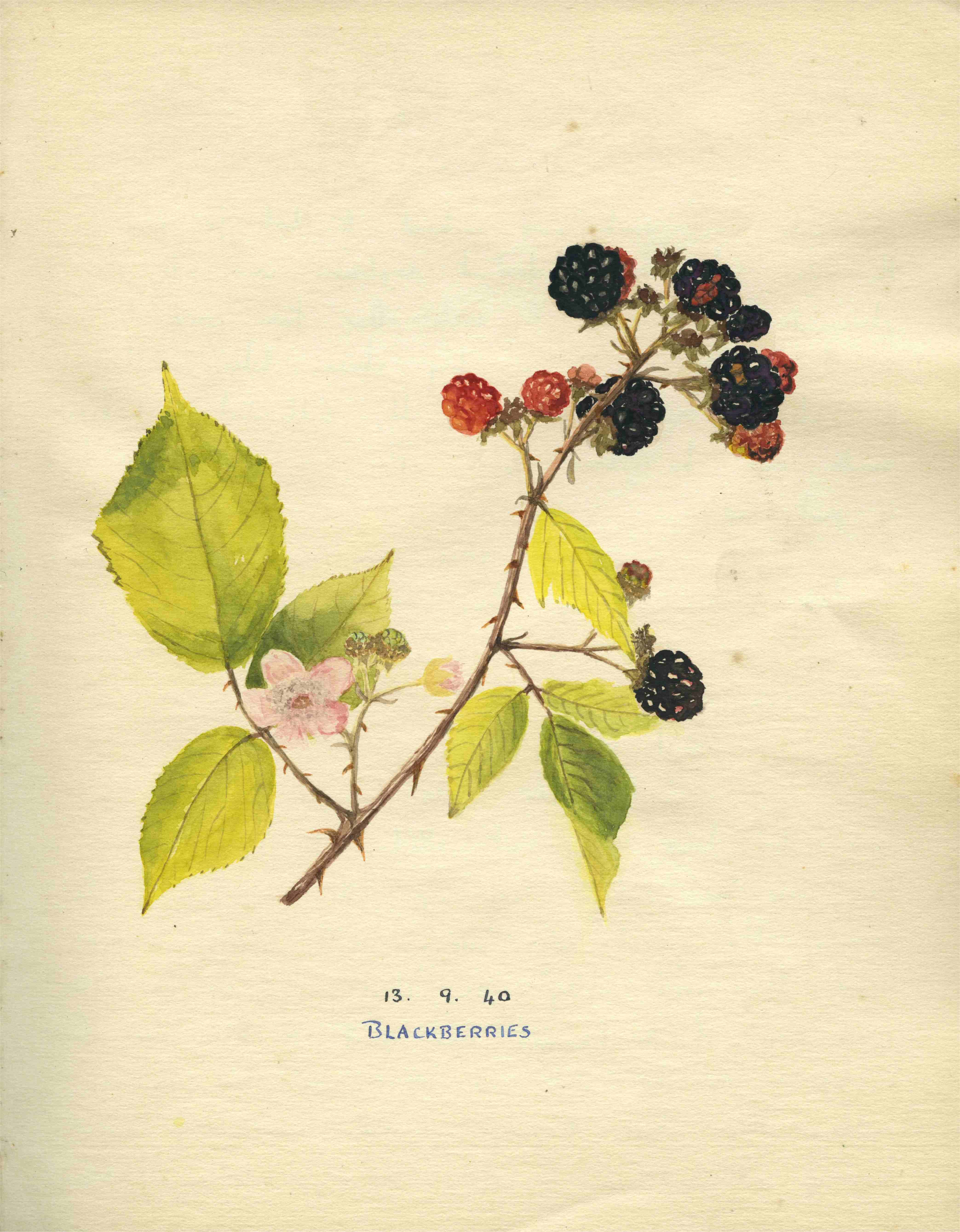
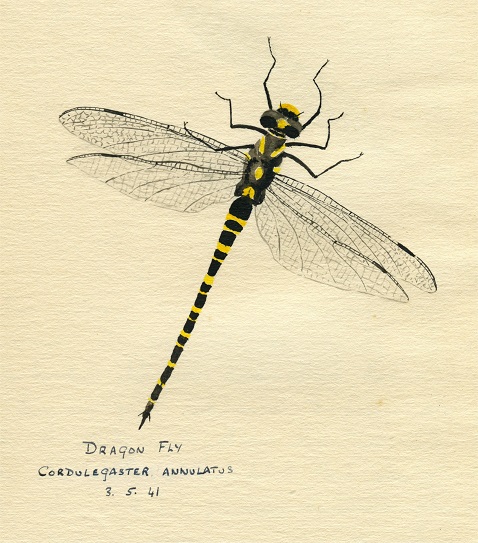
Beth Bennett (Wiley) studied at Charlotte Mason during the late 1930s and early 1940s. Sadly, Beth passed away in January 2018, aged 97. She had a long and happy life and left three married children, nine grandchildren and another nine great-grandchildren. Beth's son very kindly sent us scans of some paintings she did whilst at college.
The beautiful pictures below were part of Beth's nature notebook. All students at Charlotte Mason were required to keep a nature notebook. Charlotte herself believed that children should learn firsthand from many sources, and great prominence was given to the observation of nature. The students collected many specimens on their nature walks, bringing them back to make a painting of and noting accurately every detail of it. Often, the students would record the date and location they found the specimen. These books were personal and not marked; the main purpose was to encourage observation and an interest in nature.
Read more accounts of student life in the 1940s here:
.jpg)
.jpg)
.jpg)