
International collaboration on HiFlo-App development
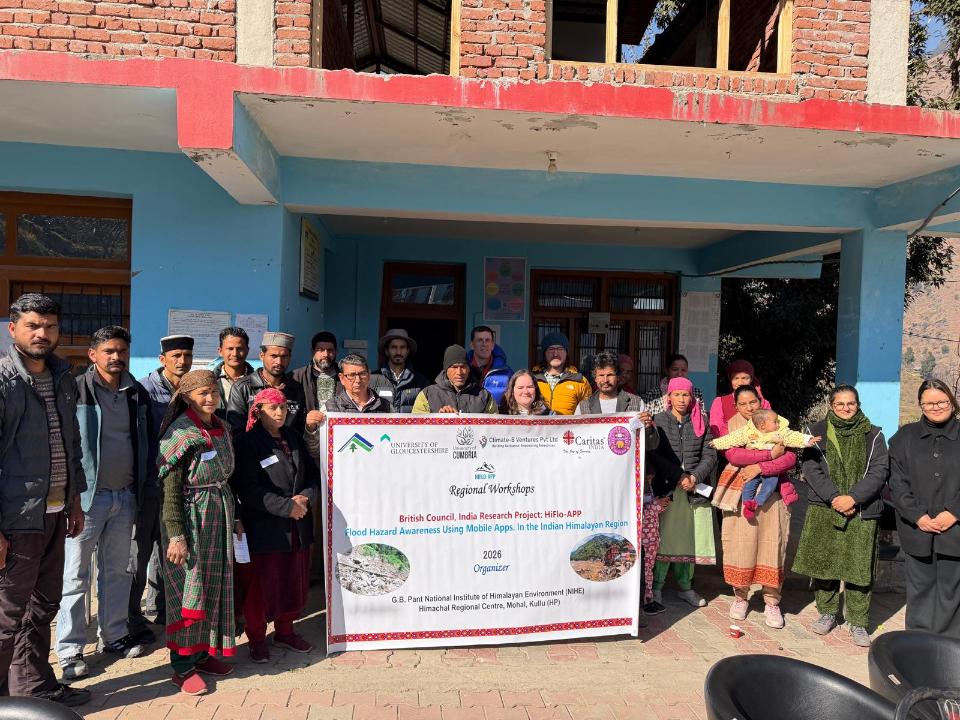
Image: University of Cumbria project leads Dr Rich Johnson (in blue, centre) and Professor Ian Convery (in yellow, centre), with colleagues collaborating on the HiFlo-App development in India.
The University of Cumbria is leading new research and development to reduce the risks associated with flood events in the Indian Himalaya.
Amid the rapidly increasing threat of disasters, such as floods, in the Himalayan region, an international research initiative named HiFlo-App is underway in Kullu, Himachal Pradesh. HiFlo-App is developing a digital platform that integrates historical flood data with community-reported hazard events and links to existing disaster management and recovery services.
The aim of the project is to equip local communities, administrators, and policymakers with timely information to strengthen disaster preparedness, response, and recovery.
By combining scientific research with local knowledge, the app will support stronger, data-driven decision-making and deliver practical benefits to users. To ensure active and sustained community participation, the project includes training programmes, workshops, and participatory engagement activities. This approach seeks to make tangible contributions to disaster risk reduction and sustainable development in Himalayan regions, while also strengthening academic and research collaboration between India and the United Kingdom.
Funded by the British Council (India), the project is led by the University of Cumbria (UK) in collaboration with the University of Delhi, the Govind Ballabh Pant National Institute of Himalayan Environment, the University of Gloucestershire (UK), Caritas India, and Climate B Ventures. The team are planning to launch their mobile app in July 2026.