the history of Bowerham Barracks
Published on: 10/11/2026
Tagged:
By Joanne Lusher
The Lancaster campus of the University of Cumbria started life as the Bowerham Barracks of the King’s Own Royal (Lancaster) Regiment. The older buildings that you see today were built between 1876 and 1880. They are recognised as heritage assets and are locally important. The barracks could house 200 soldiers during peacetime, rising to 1,600 when at war. In 1962, the site was purchased by the Church of England for the formation of a new teacher training college.
The Cardwell Reforms
Between 1868 and 1874 the Secretary of State for War, Edward Cardwell, reformed the British Army. Cardwell replaced the traditional system of officer and gentleman soldiers with professional recruits. He centralised the war office, creating reserve forces stationed in Britain, abolished harsh disciplinary measures and introduced short-service. He reorganised the army by region and allocated regiments to particular areas.
The King’s Own Royal Regiment
The regiment can trace its history back to 1680, when a troop of 1,000 soldiers was given to the Earl of Plymouth, the illegitimate son of King Charles II. The King’s Own was allocated to Lancaster during the reforms. In 1873 the War Office purchased land for £7,300 for the new barracks.
To find out more, we recommend a visit to The King’s Own Royal Regiment Museum based within Lancaster City Museum in Market Square in the city centre.
The Keep
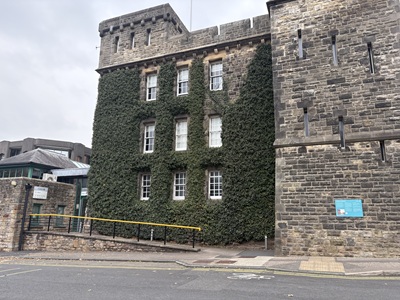
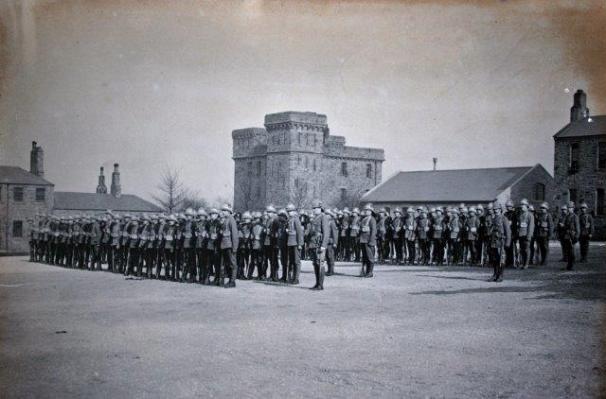
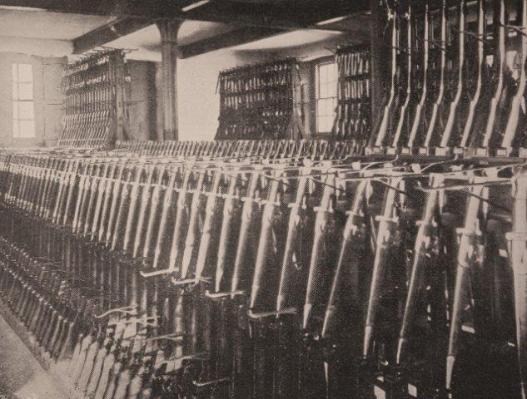
Deliberately styled on a medieval castle keep, our crenelated building was built between 1876 and 1880 for the King’s Own Royal (Lancaster) Regiment.
The Keep was originally built as the armoury. Uniforms, equipment, as well as arms and ammunition would have all been stored here.
Layout of the barracks
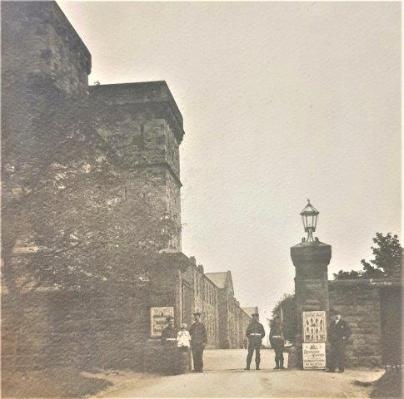
Lancaster was one of the many new barracks built after the reforms. Standard layout and building designs were used for each. Based around a central parade ground, they would have a central armoury, officers’ quarters, living quarters for married officers and their wives and barrack blocks for the soldiers. Bowerham was surrounded by a high perimeter wall and also included a guard room, stables, stores and a hospital.
Troops in active service
For 79 years, troops from Bowerham Barracks saw extensive active service. The 2nd Battalion fought in the second Anglo- Boer War in South Africa in 1899, while the 1st Battalion was in India.
During the First World War, the 1st Battalion landed in France in August 1914. They suffered 400 casualties in just two minutes of machine gun fire and served on the Western Front for the rest of the war.
In the Second World War, the 1st Battalion was stationed across the Middle East before most of the unit was captured in the Aegean Islands in 1943. A reformed Battalion then joined the Italian Campaign. The 2nd Battalion served in Jerusalem and Egypt before being selected for the Chindits Brigade for the Burma Campaign, a special operations unit known for long marches through difficult terrain often weakened by diseases such as malaria and dysentery.
The Keep today
In 1964 the barracks site opened as St Martin’s College, a Church of England teacher training college. The Keep was used as the library. It was later used as a computer room when a new main library building was built. Today the building is used for staff offices.
The Drill Shed
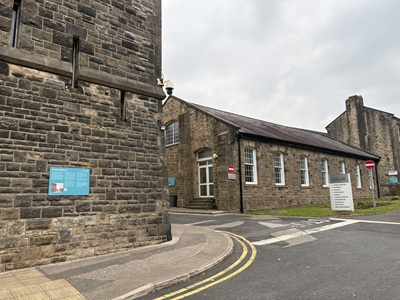
Located on the edge of the parade ground, this building was originally the drill shed. The drill shed was used for training soldiers to practisce and perform military drills. These drills would include battle formations, marching, practice for parades and ceremonies as well as training with weapons. The drills would build teamwork, discipline and self-control.
Health and wellbeing for soldiers
Before the Cardwell reforms, mortality rates for soldiers living in barracks were significantly higher than general members of the public. Cramped, poor conditions led to disease and suffering. The reforms led to much improved conditions for soldiers. At Bowerham they had access to good food and purpose-built areas for sports and recreation, including hockey, football and cricket pitches for the soldiers to enjoy.
Links to the military today
Today, the University of Cumbria has close links to the armed forces. In 2019 the university signed the Armed Forces Covenant, a promise to ensure that those who serve or who have served in the armed forces, and their families, are treated fairly, including opportunities to employ more veterans and those preparing to leave active service. In July 2023, the University of Cumbria received the MoD Defence Relationship Management’s Employer Recognition Scheme (ERS) Gold Award, the highest accolade for those who commit to employ and support those who serve, veterans and their families.
Today we train serving military personnel in Paramedic Practice, Defence Medical Leadership and Disaster, Crisis and Humanitarian Response.
The building today
During the early years of St Martin’s College, the building was used as a gymnasium and assembly hall. Today the building is used as teaching space and renamed Askwith.
The Officers' Mess
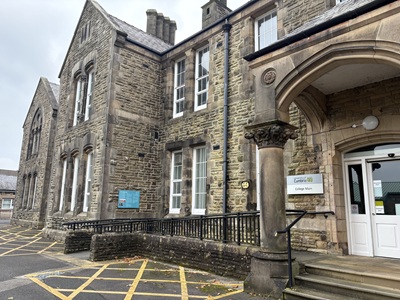
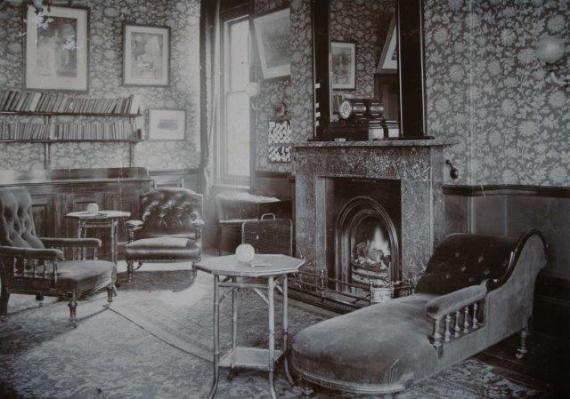
Built between 1876 and 1880 from local stone, this formal building was originally the Officers’ Mess. There are still many original features and decorative elements both internally and externally, such as the entrance porch, window surrounds and chimney stacks set on the diagonal. Inside the original features include arches, decorative door frames, ceiling moulding, dado rails and skirting.
What is a Mess?
The Officers’ Mess is the designated area where the officers (senior military personnel) sleep and socialise. The meaning of the word comes from the French ‘mes’ meaning a portion of food. The Mess would be richly decorated, and the officers would be required to be formally dressed.
The guard room dogs
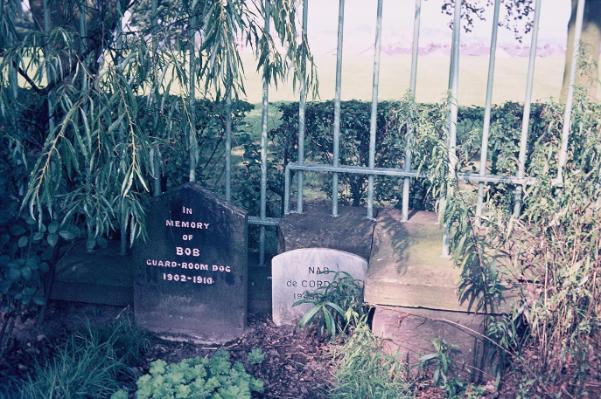
Opposite the building in the right-hand corner of the lawn by the railings, you will find two small gravestones. One is engraved: ‘In memory of Bob, the Guard Room dog, 1902 – 1910’ and the other: ‘Nab de Cordova, 1945 – 1959’. Both Bob and Nab must have been well-loved canine mascots in the Bowerham Barracks days. Aside from dogs, other animals living at the Barracks would have included horses. Behind the Officers’ Mess you will find the Print Room, this building was the original stables.
St Martin of Tours
In 1964, the former barracks became St Martin’s College, a Church of England teacher training college. The first principal, Dr. Hugh Pollard, named it after Saint Martin of Tours. Saint Martin was a soldier who later became a bishop after he refused to fight because of his Christian beliefs. Dr. Pollard chose this name to symbolise the campus's shift from a military base to a place of Christian education. The college was first known as S Martin’s to reflect the French, a ‘t’ was added later.
The building today
Since St Martin’s College days, the building has been used as the administrative centre of the campus, the Vice Chancellor has an office here today, as well as many professional services staff.
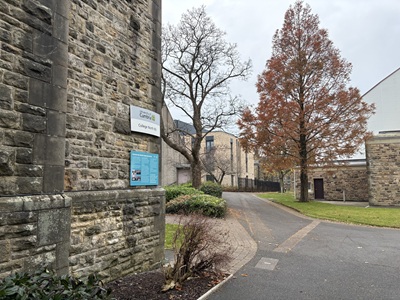
Hodgson and Brooke Barracks Blocks
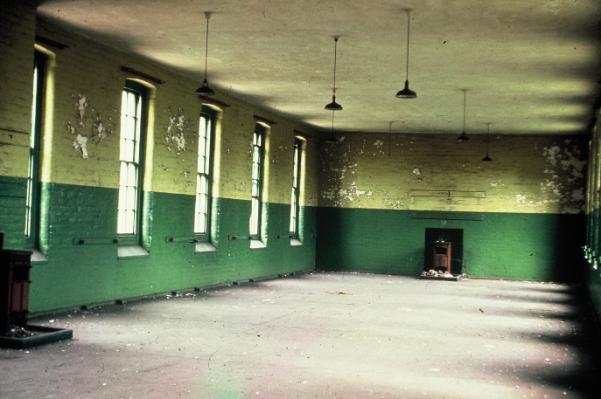
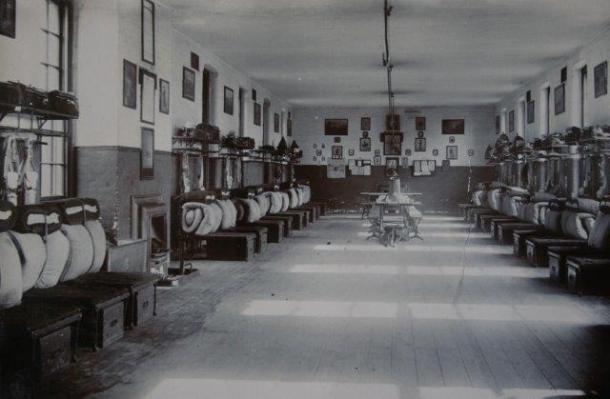
These two buildings were originally built as barracks blocks. The soldiers lived in communal rooms with foldable single beds each with a small shelf and box underneath for their belongings and uniform. The recruits were expected to keep their area neat and tidy.
On 20 April 1880, a party of 30 men of the King’s Own, under Captain Herbert Borrett, were the first to occupy the barracks.
The closure of the Bowerham Barracks
Following the Second World War the army reduced in size; the King’s Own Royal (Lancaster) Regiment joined together with the Carlisle-based Border Regiment. The regiment moved away from Bowerham and the barracks closed on 26 September 1959.
St Martin’s College
Following the war, there was a shortage of teachers. The Church of England funded two training colleges, one in Canterbury and the other in Lancaster. Lancaster Town Clerk, Don Waddell, first suggested the use of Bowerham Barracks as the site for the new teacher training college. The Church of England paid £70,000 for the site. Don Waddell served on the governing body of the college until the 1990s and today Waddell student halls of residence is named after him.
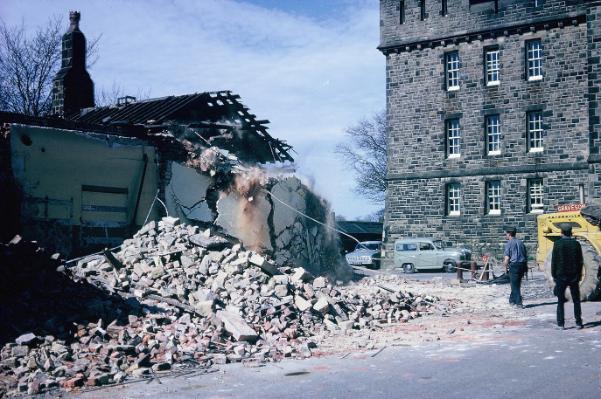
Architect Charles Pike was appointed to transform the barracks into a college. Pike broke up the barracks square with three three-storey halls of residence, a dining hall, a long corridor providing staff offices, teaching space, and a lecture theatre. A chapel was placed to provide the focal point of the campus. The Guard Room was demolished to make room for an assembly hall, which is now where the Gateway building stands today.
The University of Cumbria
The University of Cumbria was formed in 2007 by the merger of St Martin’s College (which included Charlotte Mason College from the late 1990s), Cumbria Institute of the Arts and University of Central Lancashire’s Cumbria sites. The university now operates from campuses in Lancaster, Carlisle, Ambleside, London and Barrow-in-Furness.
The buildings today
Hodgson block is now called College North and Brooke block is called College South. Today the buildings are used for staff offices and teaching space.
Select an image to expand and read more about it.