Class of 2025
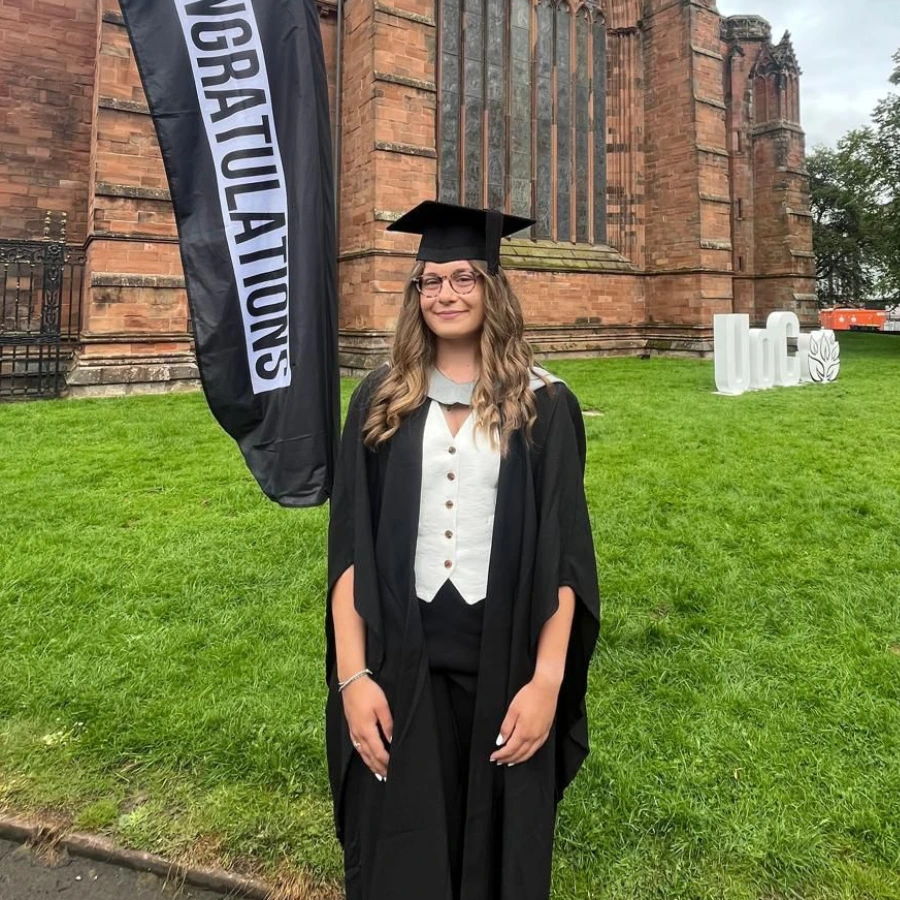

Class of 2025
Like many students, Leah wasn’t sure what she wanted to study after college and initially applied for a different course. However, after taking the time to reflect on what she genuinely enjoyed and felt confident in, she realised that photography was her passion. Below, Leah explains how she changed direction, found the course that suited her, and collaborated with other students to grow her confidence in the world of photography.
I was never sure what I wanted to do after leaving school. I originally applied to study Graphic Design at the University of Cumbria, but after attending an offer holder event, I realised it wasn’t for me. I had studied photography at GCSE and A-Level; I achieved good results, and it was something I enjoyed doing, so I decided to carry on doing what I loved. I contacted the university about my decision and applied to Photography through Clearing; after my interview with the course leader, Rob Sara, I knew I had made the right decision.
Growing up in Cumbria, Carlisle has always been the closest city to home, and I’ve been familiar with it my whole life. I’ve never been a fan of larger cities, but it’s a nice balance of being a city and a large town. Cumbria is also a beautiful place to live. The Lakes is only a short trip away for outdoor activities, and it’s a great place for amazing photographs!
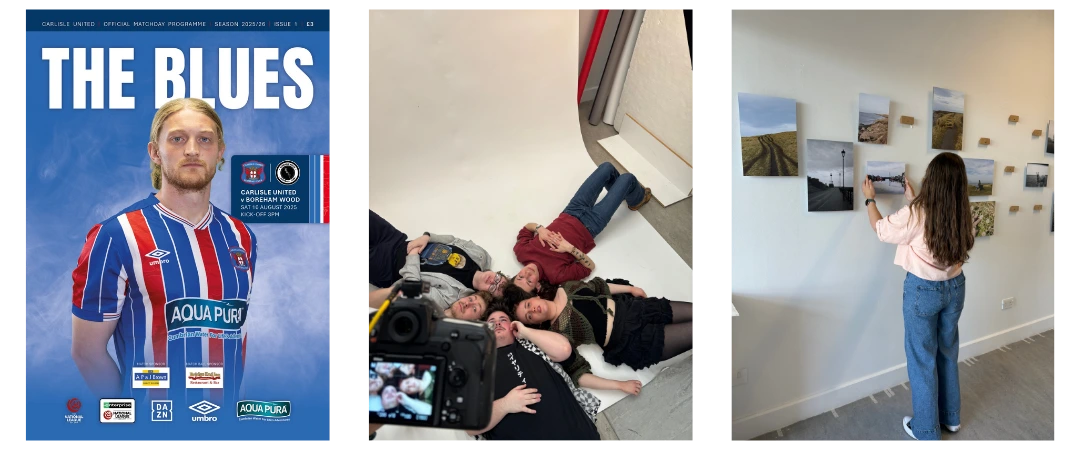
I’ve had so many good experiences at this university, and it’s all been through meeting people from different courses and getting involved. I’ve been to multiple hides across England and Scotland with Wildlife Media students, worked on collaborative projects with a few Fine Art students, and been on film sets taking photos with Film and TV students. It’s a great place to get to know other creatives and build experience. I really didn’t expect to be doing any of the things I have been doing before coming on the course.
I’ve never been the most confident person, and I’m quite introverted, so I was nervous starting, but I never thought I’d make as many friends as I have. There are so many different characters on campus, and with it being focused on arts, everyone’s interested in similar things, so you’ll find your place.
With photography, you’ve got to be a good communicator, so it’s been difficult to push through the nerves and find the confidence to speak to others. Presenting your photographs and working with your peers and friends helps to build that resilience so you can push yourself further.
Each brief given focuses on a different skill to learn, pushing you to try new ways of producing work while focusing on your own areas of interest. You’ll end up creating a diverse range of projects from working in the darkroom to developing typologies, designing and building photobooks, responding to live industry briefs, and working collaboratively with wider communities outside the university.
For me, it was really helpful having access to frequent one-to-one support from tutors. They get to know your interests, what you already know, and where your weaker points are, so they’re able to give feedback and advice according to your needs. They push you to produce work that you want to do, not what they want you to do.
The course invites professionals to talk about their careers and experiences within photography. Sometimes offering portfolio reviews, tutorials and practical workshops, it’s a chance to get to know people within the industry and build those connections within the professional world.
I wouldn’t say I’m a party person and I’m not a big drinker, but that doesn’t mean there’s nothing to do. Living in off-campus accommodation allowed me to meet people who studied courses from both the Brampton Road and Fusehill Street campuses. I enjoyed spending time with friends, so we would always have trips to the cinema, bowling and the arcade, playing pool in clubs, shopping and trying different cafes.
Explore and experiment and try different things – there’s nothing stopping you. Ask the questions, get involved. Be open to new ideas, techniques, and production.
One piece of advice that stuck with me from a lecturer was, “make a project about something you love, or something you hate”. You have to be passionate about it or have at least some interest in what you’re doing. If you’re enjoying it, then you’ll put the effort in and make the best of your studies. Have fun!
Since graduating, I became the university’s Artist in Residence for Photography. With this opportunity, I wanted to further support the students through their studies by joining in workshops and crits, offering tutorials and setting up extra informal sessions.
Recently, I initiated the Photo Lounge, which created a space without the pressures of academics or assessments. The session invited students from all year groups of photography to share their work and talk about their photography practice. Students from later years brought examples of their work from first year, giving new students insights as to what they’re working towards.
Beside this, I’ve been developing my practice as a freelance photographer, shooting for theatre performances, music gigs and short films. I’m also leading a Camera Club in my hometown where I teach locals about photography. The sessions include reviewing and analysing photographs taken by the group from the task set in the previous session, a small talk about the theory or practice of photography, then launching the next project to be done before the next session.
Although I chose not to do a placement year, there were still opportunities to work with other professionals and organisations who reached out to the university looking for photographers. Richard Lynn, a potter who studied his MA at the University of Cumbria, wrote an article about his work for the Cumbria Life magazine and needed a portrait of himself to work alongside it. I worked with Ric to produce a portrait that he was comfortable with and matched the style of other features in the magazine.
I’ve also had the honour of working with Carlisle United Football Club, taking headshots of the players for the 2025/26 season. It was an amazing opportunity, but it challenged me to put the skills I had learned on the course into practice. The shoot was fast paced in a small room, using a green screen which I had never used before, so I had to adapt to the new environment. These images have been used on Match Day programmes, social media, and the CUFC website for player identification.