Class of 2025
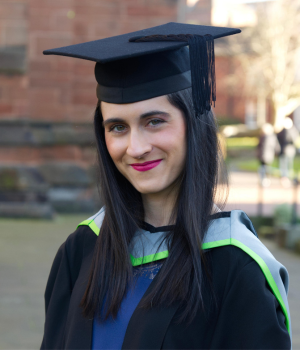
Louiseanne Bear
MSc Psychology: Research Methods & Statistics

Class of 2025
MSc Psychology: Research Methods & Statistics
Louiseanne shares her experience studying MSc Psychology: Research Methods & Statistics at the University of Cumbria. Moving from Gibraltar to Carlisle, her journey offers a realistic look at navigating challenges, building confidence, and finding direction during postgraduate study.
It all started when I chose my A-Levels. I saw that Psychology was an option, and I immediately knew I was going to pick it. A-Level Psychology was no joke, but that didn't stop me from enjoying it and wanting to pursue it at university level. After graduating from my undergraduate degree and working for two years, I decided to do my master’s in Psychological Research Methods & Statistics, as I wanted the freedom to specialise in any field. I was initially interested in Games User Research; however, as I progressed through my master’s, I became fascinated by the mental health benefits of video games.
When I decided to do my master’s degree, I knew I wanted to go somewhere I felt comfortable and was familiar with, so I returned to the University of Cumbria, where I'd completed my undergraduate degree. It felt like I'd never left, and I could not have imagined going anywhere else.
I moved from Gibraltar to Carlisle during term time. Going from living with my parents to living on my own was a shock to the system. However, I pushed through and assimilated into independence. I learned a lot about myself and what I am capable of, such as being content with who I am, being independent, and feeling more comfortable with meeting new people and opening up to them.
My tutors were very approachable; occasionally I would arrange meetings with them in a safe space to voice my concerns and resolve them however they could. As for family, I’d video chat with them for a daily catch‑up. They never pressured me to stay enrolled, let alone achieve exceptional grades. Lastly, friends, both in Gibraltar and Carlisle, were like a refuge where I could get distracted and vent about anything and feel heard and validated.
This might be a predictable answer, but my master’s graduation. Doing a master’s was the hardest thing I ever did, but knowing what I went through and that I made it out successfully filled me with great pride. As they read out my name and I walked across the altar, I knew it was official. To this day, it hasn’t sunk in. Everything happened so fast; I felt empowered by what I had accomplished but also sad because the moment was over in the blink of an eye.
Visually, it looks beautiful. My three favourite areas are the cafeteria, the library, and the Learning Gateway Building. Some areas are more spacious, such as the green patio area, while others have a more cosy vibe, such as some of the lecture rooms. Something I appreciate is how the university is an inclusive, safe space; for example, by raising awareness and promoting visibility of minority and marginalised groups. Staff are a mixture of personality traits; some are more serious, whereas others love cracking jokes in every lecture. Regardless, all are friendly and supportive.
I didn't put myself forward for volunteering or work since I wanted to prioritise my assignments, but I did work closely with tutors to get my undergraduate dissertation published in the Journal of Applied Psychology and Social Science (APASS). This gave me a taster of the day‑to‑day work of a researcher, what the publication process is, and how to write for publication.
Give yourself time to adapt. At first, it’s normal to feel nervous and self‑doubting, but know you’re capable of so much more than you think. Also, your physical and mental health always take priority, so ensure you find a balance between self‑care and your university work. Another thing is, don’t be afraid to put yourself out there. Forcing yourself to socialise and make friends is scary, but being alone is worse. You’ll always find at least one person you can connect with; they’re out there, you just need to get out there and look for them.
At the moment, it’s to continue maintaining knowledge around psychology and reading around my specialisation of how video games benefit mental health – as well as pursue personal projects such as writing for publication and books, and taking up coding to create video games that improve mental health. I am also on the lookout for any relevant job opportunities, such as working at a local university as a research assistant. I plan to stay in touch with the friends I made during postgraduate study, as they were always there for me during the stressful times.