

Zara’s journey into teaching began with a love for helping children learn and a motivation to make a positive difference in their earliest years. Now studying Primary and Early Years Education with QTS at the University of Cumbria in London, she’s already discovering how rewarding and inspiring the path to becoming a teacher can be.
Why did you choose to study your course – what or who inspired you?
I study Primary and Early Years Education with QTS, and I am currently in my first year. I have always been passionate about helping children learn, grow, and feel confident in themselves. I’m inspired by the idea of shaping the early experiences that can influence a child’s educational journey.
I have had teachers in my own life who made learning feel exciting and supportive, and they showed me how powerful a positive role model can be. That has now inspired me to pursue a career where I can have that same impact on young children.
Why did you choose the University of Cumbria?
I chose the University of Cumbria because it has a strong reputation for teacher training and offers a very supportive, hands-on approach to developing future educators. The focus on practical experiences, discussions, small class sizes and close links with local schools really appealed to me. I wanted to study somewhere that values community, encourages personal growth, and gives me the confidence and skills to become an effective teacher. Cumbria felt like the right place to build that foundation.
What have been your favourite experiences at Cumbria?
My favourite experiences at Cumbria have been the sense of community and the practical, hands-on learning. I have really enjoyed working closely with supportive tutors and classmates who genuinely want each other to succeed.
The placement opportunities have also been a highlight, because they have allowed me to apply what I have learned in real classrooms and grow in confidence. Overall, studying at the London campus makes me feel safe and because it’s smaller, it's easy to build real connections with my classmates and lecturers.
How have you found your placements?
I really enjoyed my placement at a primary school in Ilford. It has been a rewarding experience that has strengthened my confidence, deepened my understanding, and helped me grow into a reflective practitioner. The environment itself was vibrant, diverse, and very community‑centred. I loved how responsive the teaching was to children’s interests, especially in the Early Years.
Overall, my placements have been positive, challenging in the best way, and hugely motivating. They’ve confirmed how much I enjoy working with children, collaborating with colleagues, and continuously refining my practice.
What’s been the most difficult obstacle you’ve overcome in your student journey?
One of the most difficult obstacles I’ve overcome in my student journey has been learning to balance the demands of university with the fast paced, unpredictable nature of primary classroom placements. In theory, everything feels structured and manageable but stepping into a real classroom brings a different level of responsibility and emotional investment.
How I overcame this was by actively seeking feedback and using it a tool for improvement rather than criticism. And also allowing myself to be a learner and not expecting perfection from day one.
What do you enjoy most about your course?
What I enjoy most about my course is the moment when everything I’ve learned in lectures starts to make sense during placement. Concepts like child centred learning, scaffolding, or formative assessment feel quite abstract at first, but when you see a child respond to something you’ve planned or taught, it becomes real and meaningful.
Primary Education allows you to be imaginative designing activities, using stories, integrating play, and finding ways to make learning exciting.
How have your tutors supported you during your studies?
My tutors have supported me by creating an environment where I feel both challenged and encouraged. They don’t just teach content – they model the kind of reflective, child centred practice they want us to develop. They encourage me to be reflective with my practice, which has helped understand my strengths and identify areas for development. Also, I feel that I have been really supported with assignments, and they’ve made the course feel manageable.
How is university life beyond your studies?
Outside of my academic work, university life has given me space to explore new interests and develop a sense of independence. It’s been a chance to step away from the structure of school placements and lectures and enjoy being part of a wider community. I have been trying to take better care of my wellbeing – learning how to balance work, rest, and my social life has been just as important as the academic side. It’s taught me how to set boundaries and look after myself.
What do you enjoy the most about student life at your campus/in the area?
What I enjoy most about studying at the University of Cumbria’s London Campus is having a friendly, supportive campus environment but also the energy of London right on the doorstep. I have had the chance to explore the local area, too – the location of campus means placements, cultural experiences, and professional events are all within reach. Museums, galleries, parks, and educational centres have also become part of my every day learning.
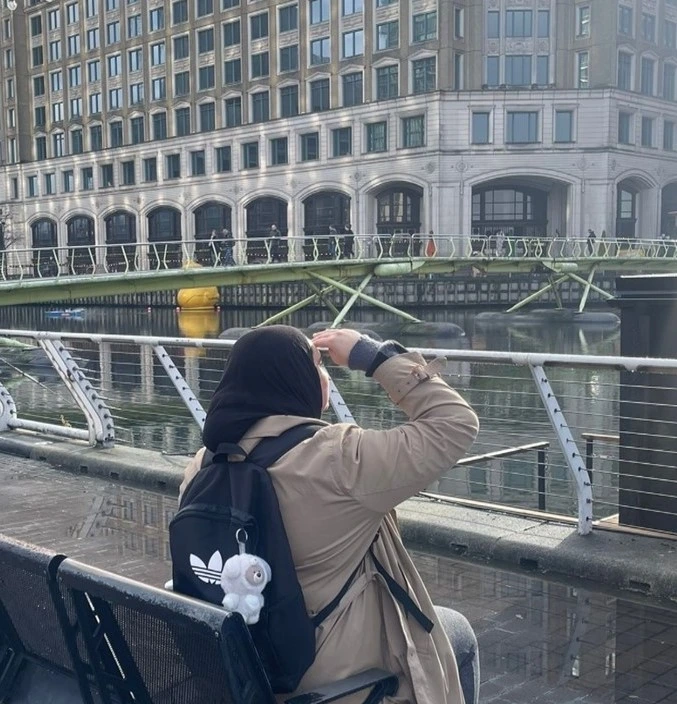
During our 2 hour lunch break, I am able to go to Canary Wharf, which is a 10-minute walk from the university!
What would be your top tips for people thinking of doing the same course as you?
Placements are where everything clicks. Don’t wait to feel “ready,” you learn by doing. Ask questions, observe different teachers, and try out ideas even if they’re not perfect. Reflection is a huge part of the course. Instead of seeing it as a chore, use it to understand what worked, what didn’t, and why. It’s one of the fastest ways to grow as a teacher.
Your confidence grows massively when you connect with pupils. Learn their interests, celebrate their progress, and be present with them. It makes teaching more natural and enjoyable. Lesson plans, assignments, placement files, observations... it adds up quickly. A good system for planning and deadlines saves you stress later on.
And just have fun!
What are your career plans, and how is your course preparing you for your future career?
My main career goal is to become a primary school teacher who creates a supportive, engaging, and inclusive learning environment for children. I’m particularly interested in developing strong foundations in early literacy and numeracy, and I’d love to work in a school where I can continue growing professionally through mentoring and ongoing training.