
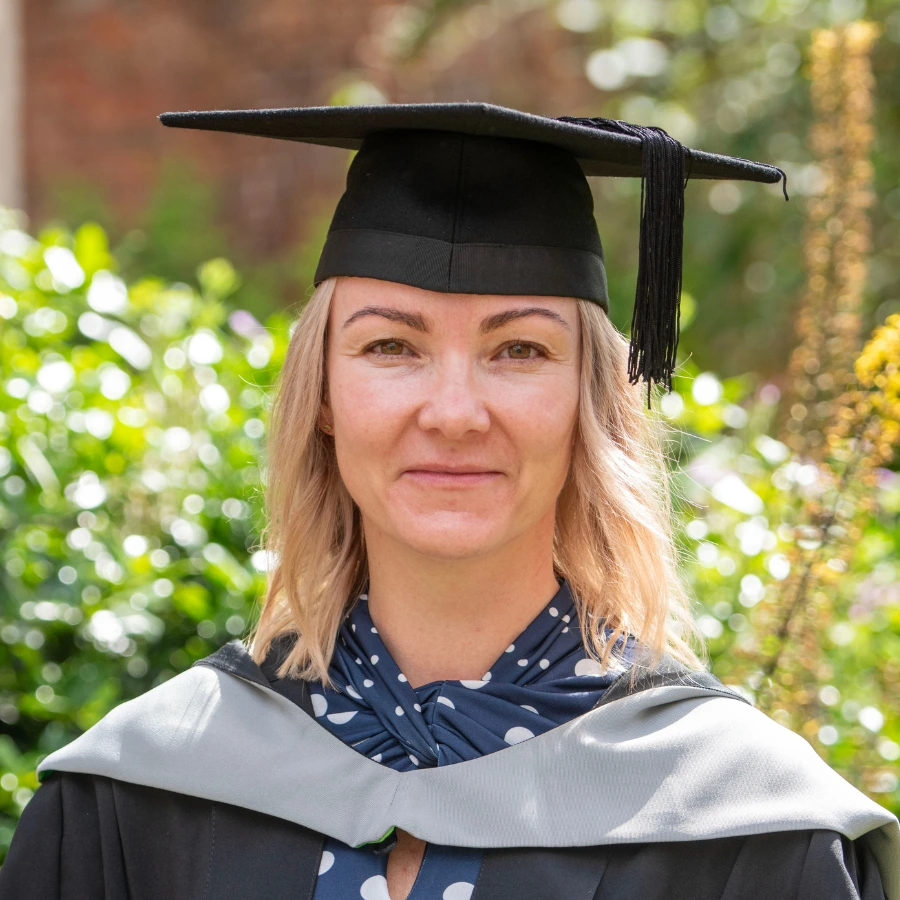
Lisa built her career through hands‑on experience before joining the University of Cumbria through the Brathay Trust Aspiring Leaders Programme. Earning her undergraduate degree not only boosted her confidence but also revealed the powerful role research can play in shaping organisational practice. Motivated to build on that experience, she moved directly into the Doctor of Business Administration (DBA) programme, determined to deepen her knowledge and use it to address the workplace challenges.
Can you tell us a little about yourself and your professional background?
My name is Lisa Scargill, and I am a Bid Manager at Balfour Beatty, where I help shape strategic bids for major infrastructure projects across the UK. Before moving into this role, I spent several years working in Social Impact, most recently leading Social Impact across the North of England. Working alongside project teams, clients and communities to maximise the positive impact of infrastructure projects gave me a real insight into the opportunities and challenges faced by the profession.
That experience sparked a much deeper interest in how Social Impact is understood within organisations and why professionals working in this field can experience different levels of influence despite delivering significant business and community value.
My journey into higher education has been anything but traditional. I left formal education at 18 and spent many years building my career through practical experience before being accepted onto the University of Cumbria and Brathay Trust Aspiring Leaders Programme. Completing that undergraduate degree transformed my confidence, challenged the way I thought about leadership and showed me that academic research could have a real impact on business. Rather than marking the end of my studies, it inspired me to continue my academic journey by progressing directly onto the Doctor of Business Administration (DBA).
It's been a challenging but incredibly rewarding journey, demonstrating that education doesn't have to follow a conventional path and that it's never too late to invest in yourself.
How would you describe your research project, and what key questions are you exploring?
My research explores the experiences of women working in Social Impact roles within the UK construction industry. Although these roles are increasingly important in delivering organisational and societal value, they are often perceived as "soft" functions and can struggle to gain strategic influence within organisations.
The research seeks to understand how women experience organisational legitimacy and influence, how organisational culture shapes these experiences, and how the strategic value of Social Impact is understood and recognised within complex construction environments.
Ultimately, I hope the research contributes to a better understanding of how organisations can unlock the full strategic potential of Social Impact professionals while creating more inclusive workplaces.
What inspired you to pursue this research topic and choose a DBA?
The inspiration came directly from my own professional experience. Throughout my career, I repeatedly observed highly capable Social Impact professionals delivering significant value but often finding themselves excluded from strategic conversations or viewed differently from more traditional operational functions.
I wanted to understand why that happens, not simply from a theoretical perspective but through the lived experiences of the people working in these roles.
A DBA felt like the perfect fit because it combines rigorous academic research with practical business application. Rather than studying business from a distance, it allows me to investigate a real organisational challenge with the aim of producing knowledge that can genuinely improve practice.
What kind of support have you received so far?
I've been incredibly fortunate to receive support from several different people throughout my journey.
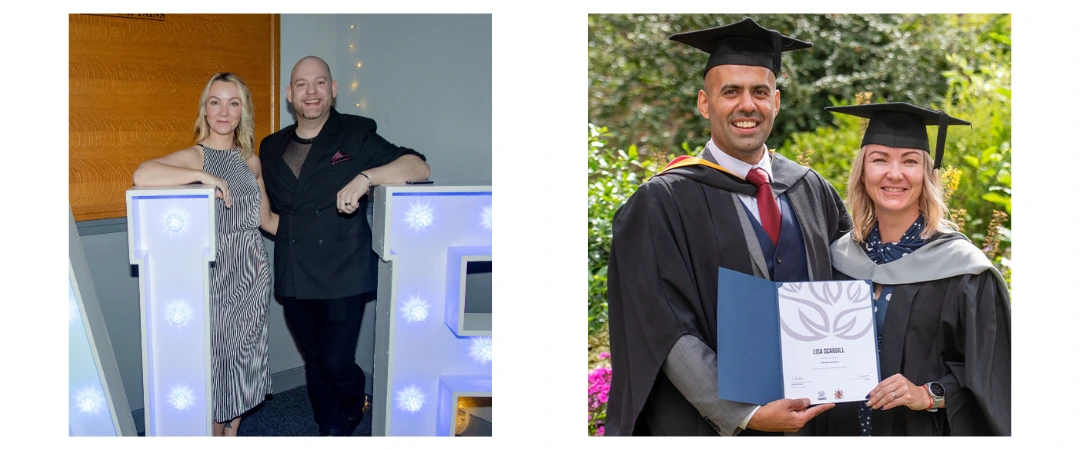
My academic journey really began with the University of Cumbria and Brathay Trust on the Aspiring Leaders Programme. The encouragement, belief and support I received from the programme team gave me the confidence to achieve something I never imagined possible. Their enthusiasm for learning and development played a significant role in my decision to continue onto the DBA, and I'm genuinely grateful that they encouraged me to see my potential beyond the undergraduate programme.
Throughout the DBA, my supervisors and the wider academic team have continued to provide excellent guidance, constructive challenge and encouragement. The DBA cohort has also been a great source of support, bringing together professionals from a wide range of industries and parts of the world, who all bring different perspectives and experiences.
Professionally, I've also been fortunate to work for an organisation that values continuous learning. Throughout both my Social Impact and Bid Management roles at Balfour Beatty, I've been supported by colleagues and leaders who recognise the value that doctoral research can bring to professional practice.
Finally, none of this would have been possible without the support of my family, who have accepted that evenings and weekends have often involved journal articles, assignments and research instead of relaxing together!
How are you managing your time and balancing study with work and life at this early stage?
Balancing a full-time role alongside doctoral study definitely requires organisation and discipline.
I've become very intentional with my time, planning study around work commitments and making the most of early mornings, evenings and weekends. Rather than waiting for large blocks of free time, I've learned to make consistent progress through smaller, focused study sessions.
It's not always easy, but having genuine passion for the research makes the workload feel worthwhile. I've also learned the importance of protecting time to rest and spend with family, as maintaining that balance is essential over the long term.
What opportunities has the DBA provided to enhance your professional skills and expertise?
The DBA has transformed the way I think about leadership, organisational culture and decision-making.
It's strengthened my critical thinking, research capability and confidence when engaging with complex organisational challenges. I've become much more comfortable questioning assumptions, analysing evidence and applying theory to practice.
Professionally, it's also enhanced my credibility when working with senior leaders and clients, allowing me to contribute not only from experience but also from an evidence-based perspective. The programme has reinforced my belief that research has a vital role to play in improving organisations and creating meaningful change.
What advice would you give to someone considering studying a DBA?
Don't be put off if you don't have a traditional academic background or if you're wondering whether you're "ready". If you're curious, passionate about improving practice and prepared to be challenged, a DBA can be an incredibly rewarding experience.
Choose a research topic that genuinely matters to you because you'll be living with it for several years. There will inevitably be difficult moments but having a question you're passionate about makes all the difference.
Looking back, if someone had told the 18-year-old me that one day I'd be studying for a doctorate while helping shape major infrastructure projects, I would never have believed them. The University of Cumbria gave me the confidence to take that first step back into education through the Brathay Trust Aspiring Leaders Programme, and every opportunity since has grown from that decision.
I hope my story encourages others to believe that it's never too late to change direction, challenge yourself and achieve more than you thought possible.