Sarah Neill
- MRes
Project Title: Behavioural Responses of Norwegian Herring-Feeding Killer Whales to Swim Encounters in Northern Norway

Project Title: Behavioural Responses of Norwegian Herring-Feeding Killer Whales to Swim Encounters in Northern Norway
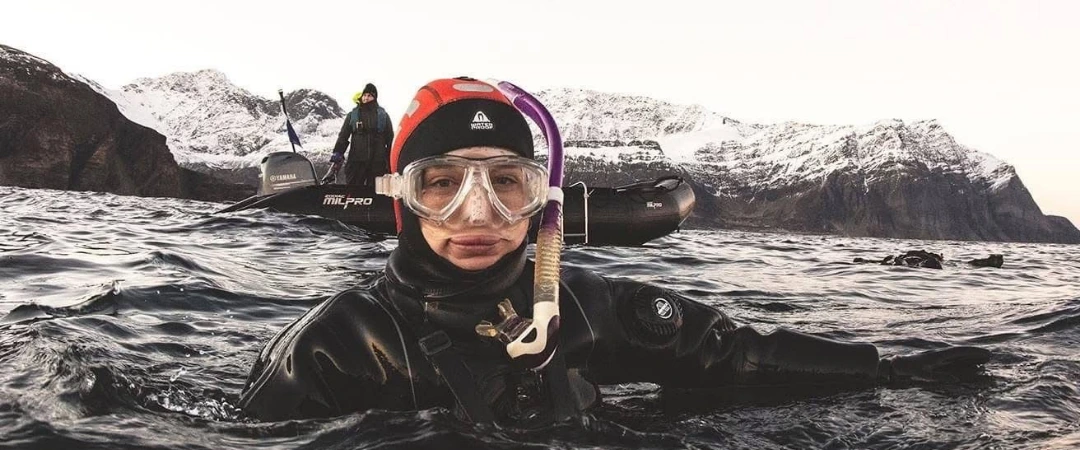
Sarah Neill’s MRes research explores how wild killer whales in Northern Norway respond to close encounters with snorkellers. Combining her marine conservation background with experience in wildlife tourism, she assessed impacts on whale behaviour, welfare and human safety, offering evidence‑based guidance for responsible, conservation‑minded tourism.
My MRes research investigated the behavioural responses of Norwegian herring-feeding killer whales (Orcinus orca) to in-water encounters with human snorkellers in Northern Norway. As whale tourism in this region has expanded rapidly, opportunities for close interactions with wild killer whales have become increasingly popular. Despite the growth of this industry, there remains limited empirical evidence regarding the potential effects of these encounters on whale behaviour and welfare, as well as human safety.
To address this knowledge gap, I analysed video footage collected during swim encounters. A key component of the research was the development of a comprehensive behavioural ethogram that incorporated both underwater and surface-active behaviours. The study examined whether whale behavioural responses varied according to demographic characteristics, swimmer behaviour, and vessel proximity, including the relationship between vessel proximity and the occurrence of tail slaps.
A key objective of the research was to identify behavioural responses associated with swimmer encounters, providing insight into how killer whales perceive and respond to human presence in their environment. By assessing these responses, the study contributes to a broader understanding of cetacean–human interactions within the context of wildlife tourism. The findings aim to inform evidence-based management strategies and best-practice guidelines for responsible whale tourism, supporting the long-term sustainability of the industry, the conservation and welfare of these iconic marine predators, and the safety of tourist encounters.
My interest in marine life began at a young age and ultimately inspired me to pursue a career in marine biology. Through academic study and professional experience in marine conservation, wildlife tourism, education, zoos and aquariums, and expedition leadership, I developed a strong interest in animal behaviour and gained firsthand insight into how animals respond to both natural and human-induced influences. Then, in 2022 I was selected to co-lead an expedition to Arctic Norway, where one of my responsibilities was to develop a whale research programme that would actively engage expedition participants in meaningful scientific data collection. While reviewing the literature on whale tourism and human–wildlife interactions, I became particularly interested in the work of Dr. Chantal Pagel, whose research highlighted the potential influence of tourism activities on the behaviour of marine wildlife and identified several areas requiring further investigation.
Inspired by these findings, I recognised an opportunity to build upon her recommendations by developing a study focused on the behavioural responses of Norwegian herring-feeding killer whales to swim encounters. The expedition provided a unique platform to collect observational data while involving participants in the research process, creating a valuable connection between science, education, and citizen science.
As the scope and potential impact of the project became clear, I decided to formalise the work through an MRes. I chose an MRes because it offered the opportunity to undertake an independent research project while developing advanced scientific skills. The degree allowed me to combine my professional experience in marine ecotourism with rigorous academic research and provided an ideal stepping stone for future research and conservation work.
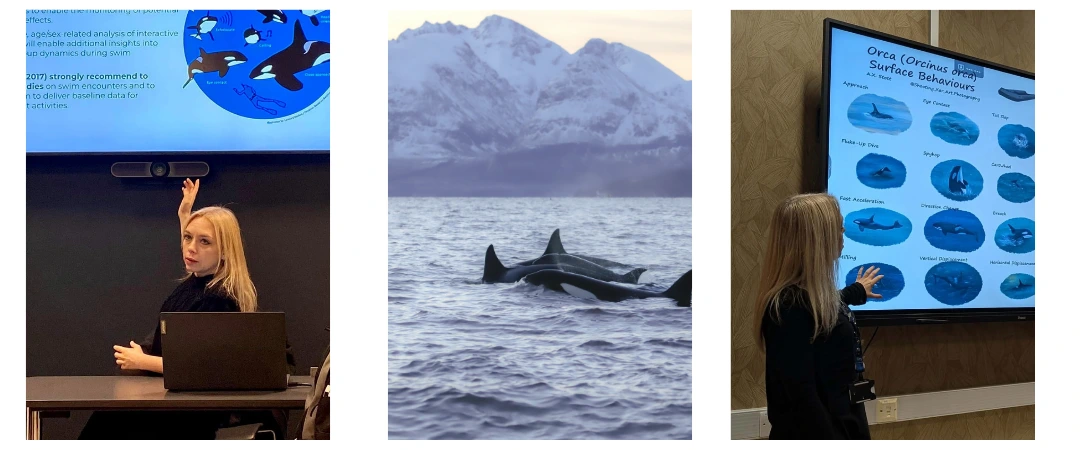
One of the most valuable aspects of my MRes experience was the guidance and mentorship I received from my supervisory team. Their expertise helped me navigate every stage of the project, and their constructive feedback and encouragement were instrumental in both the successful completion of the research and my development as an independent researcher.
I also benefited greatly from engaging with fellow postgraduate researchers, academic staff, and the wider university community. Presenting my research at different stages of the programme provided valuable opportunities to discuss ideas, receive constructive feedback, and refine my approach. This collaborative and supportive environment not only strengthened the quality of my research but also contributed significantly to my academic and professional growth.
Balancing an MRes alongside full-time teaching and expedition leadership required careful planning and strong time-management skills. From the outset, I used a Gantt chart to map out the different stages of the project and establish realistic milestones. Breaking the research into smaller, manageable tasks helped me maintain progress while balancing other commitments in my life.
A particular challenge was the analysis of a large video dataset. To make this process more manageable, I set myself daily targets of analysing 10-15 videos at a time. Focusing on smaller, achievable goals prevented the task from becoming overwhelming and helped me maintain momentum throughout the analysis phase.
There were certainly periods when balancing research, teaching, and expedition work was demanding, and I often continued working while travelling, taking my laptop with me on fieldwork and expeditions around the world. However, the flexibility of the MRes programme allowed me to adapt my schedule around these commitments. The experience strengthened my organisational skills, self-discipline, and ability to manage multiple responsibilities simultaneously - skills that continue to benefit both my professional and personal life.
The MRes significantly strengthened my research and analytical skills. I gained experience designing a research project, developing behavioural observation protocols, managing large datasets, conducting statistical analyses, and communicating scientific findings.
The project also enhanced my critical thinking, problem-solving, project management, and scientific writing abilities. Presenting my work and discussing findings with academic and professional audiences improved my communication skills and confidence in explaining complex scientific concepts to different audiences.
These transferable skills are highly valuable not only within research but also across conservation, education, and the expedition industry.
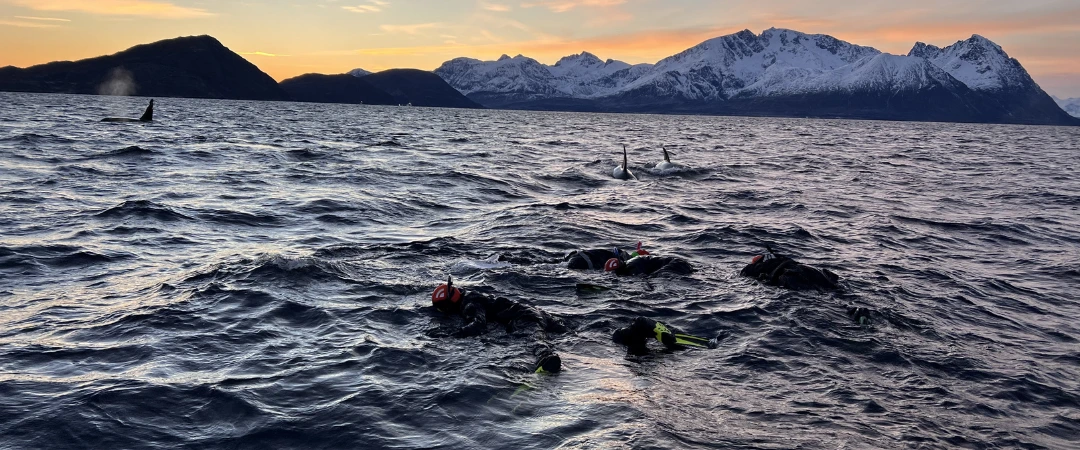
One of the most rewarding aspects was contributing to a field of research with real-world conservation and management relevance. Knowing that the findings could help inform responsible wildlife tourism practices made the work particularly meaningful.
I also found great satisfaction in developing as an independent researcher. Completing a large-scale project from initial concept through to final analysis and dissertation gave me confidence in my abilities and demonstrated how much I had grown throughout the programme. Beyond the academic achievements, the MRes allowed me to combine my personal passion for marine wildlife with scientific research, which made the entire experience incredibly fulfilling.
Following the completion of my MRes, I plan to continue working within the marine conservation, expedition, education, and research sectors. The project has strengthened my ability to conduct independent scientific research and provided a strong foundation for future opportunities in conservation research, wildlife management, and environmental education. It has also enriched my teaching by providing a relevant case study through which to explore animal behaviour, research methods, and wildlife tourism. Furthermore, the findings have informed my approach as an expedition leader, strengthening my understanding of the ethical considerations surrounding wildlife tourism and the need to balance meaningful wildlife encounters with conservation, animal welfare, and human safety objectives. The experience has reinforced my interest in applied conservation science, particularly research that helps balance wildlife protection with sustainable nature-based tourism.
My advice would be to choose a topic that genuinely excites and motivates you. Research projects inevitably involve challenges, and having a strong personal interest in your subject makes it much easier to stay engaged throughout the process. Don't be afraid to ask questions, seek support, and embrace opportunities to learn new skills. An MRes is about much more than completing a dissertation; it is an opportunity to develop as an independent researcher, build confidence, and explore subjects that you are passionate about. Most importantly, enjoy the journey. The skills, experiences, and connections you gain during an MRes can open doors to opportunities you may never have expected.