
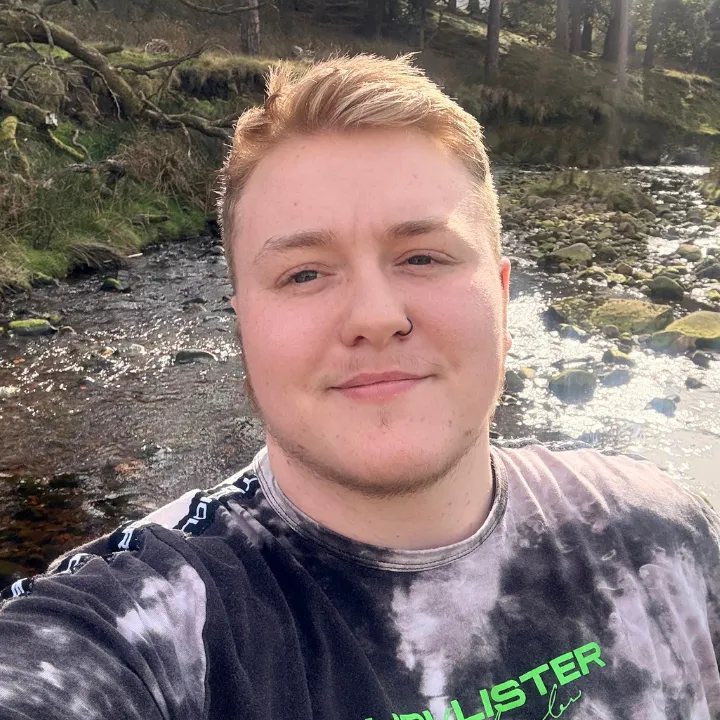
Sport has always been a huge part of Oliver's life, but a knee injury meant he could no longer pursue it in the way he once had. Rather than stepping away from the world of sport altogether, he developed a keen interest in injury, recovery and rehabilitation. Now studying BSc (Hons) Sport Rehabilitation at the University of Cumbria, he's combining his passion for sport with a desire to help others get back to doing what they love.
Why did you choose to study Sport Rehabilitation course – what or who inspired you?
I had a minor ACL and meniscus tear back in 2018, but this later developed into a full ACL rupture and osteoarthritis. I've always played a multitude of sports, including cricket, football, shot put, where I was 2nd in the district at the time, tennis and badminton. After my ACL reconstruction in 2022, I also played rugby until the surgical graft failed. Unfortunately, my further injury was a result of receiving poor care and not having the support needed for rehabilitation, which left me back at square one and unable to do the thing I love: sport.
Going through that experience inspired me to study Sport Rehabilitation. I wanted to make a difference to athletes, but also to lower-level sports performers who often get forgotten about because they don't have the funds for private care or aren't seen as important as national-level athletes. Since my graft failure, I've been focused on rehabilitation and muscle activation to help stabilise my knee, alongside managing the pain and inflammation from osteoarthritis. I suppose the apt phrasing would be: if you can't beat them or join them, then you fix them.
Why did you decide to join the University of Cumbria?
I had wanted to go to university for a couple of years, but I wasn't too sure about how to get there and didn't have the support around me to help. I spoke to a University of Cumbria graduate and thought you know what, I want this and it's in one of the most amazing locations in the UK, so I applied.
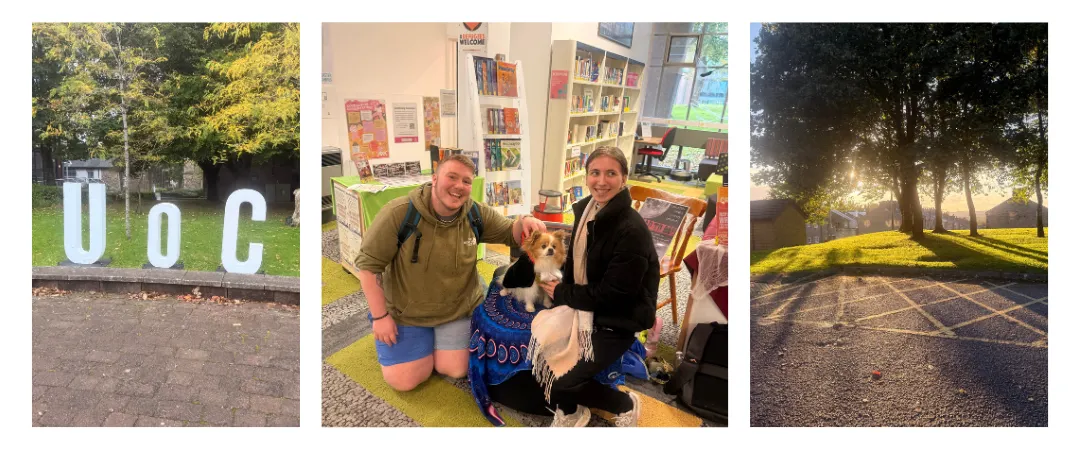
The main attraction to UoC for me was the campus being so much smaller. Most university campuses are like mini cities, but not Cumbria. I liked this because there was lots of greenery on campus, far more affordable accommodation prices than most universities, plus it wasn't far at all to get to the Dales, Peaks, Lakes or Pennines. For someone who loves the outdoors, there wasn't really a more perfect place.
 How has your experience at the University of Cumbria differed from what you expected?
I visited UoC at the Offer Holder Day (the day you get to visit campus and take part in different activities if you've been offered a place or applied) and I would say that gave a good expectation of what was to come. I suppose the only things I have found slightly different to what I expected is just how much support there is financially and for SEND, but also how there is emphasis on independent learning, which is very important – I have around 13 hours of classes a week.
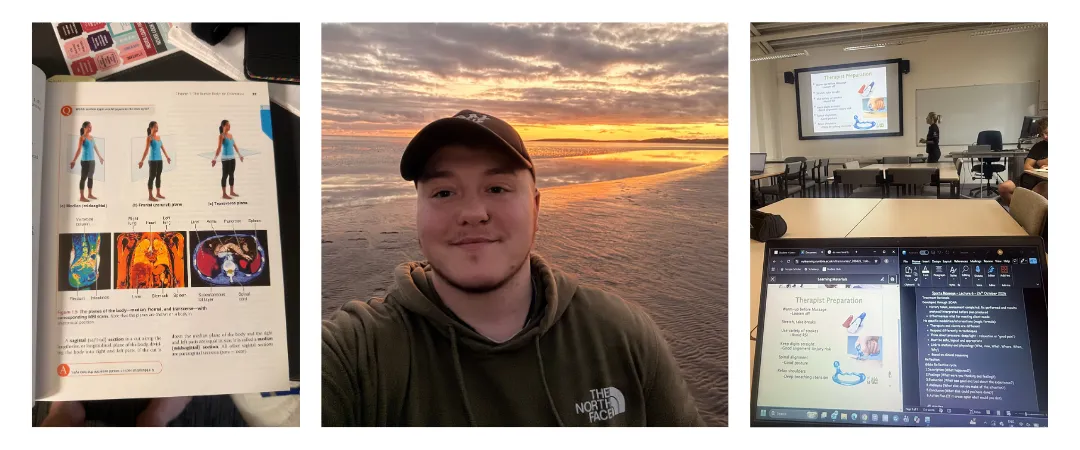
Independent learning in Sport Rehabilitation can look different for each student. For me, this looks like printing off skeletons then labelling each bone; study sessions with my friends in class and quizzing each other on definitions and different scenarios; palpating certain landmarks and muscles on friends to almost imagine stripping away the skin to the structures underneath and seeing how they present on different people with different injuries; as well as doing further studying with textbooks, journal articles and the directed study tasks set by lecturers.
What has been your highlight at university so far?
Having been here a year already, at times I did wonder if I was going to see the degree through, but so far, I can quite confidently say that studying Sport Rehabilitation has kept me motivated to complete my degree, all be it difficult at times. But I'd say the ultimate highlight is the location, being able to go to the Forest of Bowland after class and the Lakes or Dales on my days off. I've also had some very good SUP (stand up paddleboarding) days on Ullswater.
How would you describe the University of Cumbria and the facilities provided?
You don't feel suffocated by city living but still have the opportunity to go into town without much effort. Essentially, it's open and expansive and the world is you oyster.
The sport facilities on campus are very accessible to all students, not just students on sport-related degrees. There are multiple sports societies if someone is not too sure where to start. The newly renovated gym is the perfect mix of not being too big that it's overwhelming when you walk through the door, but big enough that you're not waiting for equipment all the time. It is also possible to rent equipment, such as badminton courts and rackets for a session, but this is also included in the UOC Active+ membership. There are astroturf courts available to hire/rent as well.
Are there any modules that have really stood out to you?
I think all of the modules stand out because of how they link together. Sports massage is hands-on and practical, but the intended outcomes are both psychological and physiological, linking to multiple body systems. This then connects to functional anatomy and sport injuries of the lower limb, where you gain a detailed understanding of what's beneath the skin, from bones and bony landmarks to muscles and muscle fibres.
In Personal and Professional Development, you learn about data, statistics, research and academic writing. You learn how to measure things such as fatigue, understand the relationship between recovery and performance, and analyse data to prove or disprove a hypothesis.
Then there is Qualificatory Unit 1, where you begin putting your learning into practice on real athletes. Overall, the modules create a sense of purpose because everything feels relevant to your future career and helps keep you motivated.
What do you enjoy most about studying Sport Rehabilitation?
What I enjoy most about Sport Rehabilitation is learning how the body works and how the different body systems interact. I find recovery, injury management and performance fascinating, as well as the emerging technology being used in areas such as concussion prevention and treatment. It's also interesting to see the growing recognition of the mental side of sport and how much it can influence performance.
What’s a challenge you’ve overcome during your time at university, and how did you do it?
I'd say the main challenge was just adjusting to university life compared to how my life was before, e.g. budgeting for the inevitable repairs on a 07 car, paying rent termly opposed to monthly, different social dynamics, and learning environments and methods.
I'd say I got through it thanks to the extremely helpful Accommodation team but also by realising it is okay to ask for help and understanding that the support available really is for all students. But also, maintaining open and honest communication with my lecturers.
Have you had any opportunities for work placements, volunteering, or part-time jobs during your studies? How does this enhance your experience?
The sport degree students have just been invited to help with performance testing for Atlantic rowers Ethan Chapman and Lottie Hopkinson, known as the Exploring Duo. I have expressed an interest in this as it's very interesting and can be used towards placement hours. The outline for the two days they are with us in the Performance Testing/Analysis Suite is:
Monday - anthropometric testing to assess body composition, VO₂ max and lactate threshold testing on a rowing ergometer to assess fuel usage, helping determine their nutritional requirements and optimal rowing heart rate.
Tuesday - stress testing in a heat chamber to assess body temperature and sweat/water loss to plan appropriate hydration strategies.
I know that throughout my degree I will also have opportunities to complete placements at the Brathay 10 in 10 (10 marathons in 10 days), the Fred Whitton Race (a 112-mile cycling event through the Lake District) and The Lap (a 47-mile ultramarathon circumnavigating Lake Windermere), which also sound interesting.
What support services have you found helpful, whether for academic, mental health, career guidance or any other support received?
The Careers Service has been particularly helpful when exploring different avenues. The Disability Team has also provide excellent support, taking the time to listen to what works for you, what adjustments can be put in place, and how to make them happen. I also like the service where you can submit 500 words of your essay and it can be reviewed – it's very helpful when you are unsure.
The Accommodation team and the Student Enquiry Point (StEP) are really helpful, too. When you're not quite sure what you need, StEP can organise the relevant services for you.
What advice would you give to your first-week self or to students thinking about joining the university?
Enjoy everything as and when it comes, and don't put too much pressure on yourself to be perfect. Also, if you have the means, get out and explore town. Atkinsons Coffee is a very nice place to go, and there's so much surrounding nature in and around Lancaster.
What are your plans after graduation, and how is the University of Cumbria helping you achieve those goals?
After graduation I am aiming for a Masters in Physiotherapy – it opens up a lot of avenues for different career pathways. The university is helping me achieve these goals by doing enhancement weeks where I can join various online Teams' sessions and webinars about the many opportunities out there. These are great for discovering something you had no idea about and may actually really like.
But also, the lecturers are very helpful. They know what you need to achieve in your undergraduate degree to be able to progress to postgraduate education once you graduate.
Learn more about our Sport courses at the University of Cumbria.