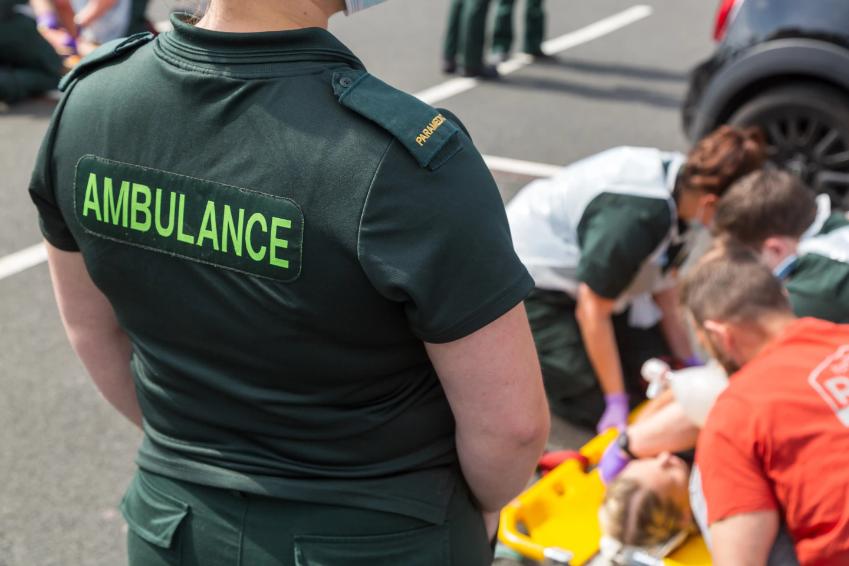
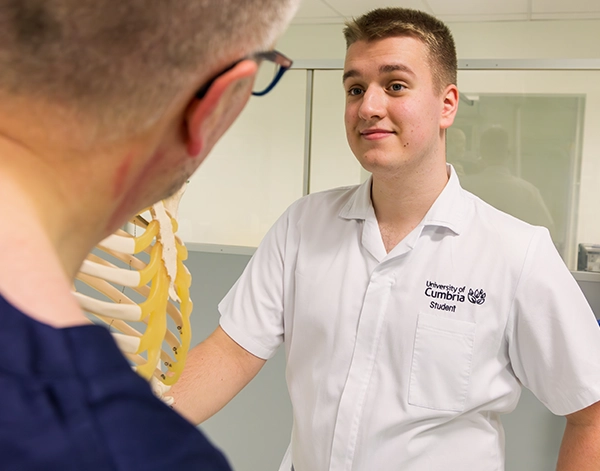
The BSc (Hons) Paramedic Science Degree Apprenticeship enables apprentices to combine academic study with on-the-job training, preparing them for registration as a Paramedic with the Health and Care Professions Council (HCPC) and practice under the protected title of Paramedic. Designed in line with national professional and regulatory standards, including those set by the HCPC, the Institute for Apprenticeships and Technical Education, the Quality Assurance Agency, and the College of Paramedics, the programme develops the broad knowledge, skills, and behaviours required for contemporary paramedic practice. Delivered over 24 months through a blended learning model, apprentices engage in campus-based skills and simulation alongside online theoretical study, supported by a strong work-based learning framework. With balanced and varied assessments and comprehensive academic support, the programme equips apprentices with the confidence, competence, and professional readiness to succeed in the dynamic and evolving paramedic role.
Equip apprentices with the broad knowledge, skills and professional behaviours required of a registered paramedic, aligned with national standards including HCPC and professional benchmarks.
Integrate academic study with practical, work-based learning, enabling apprentices to contextualise theory in the workplace and develop occupational competence at a professional level.
Prepare apprentices to apply for HCPC registration and practice safely under the protected title of Paramedic following successful completion of the degree.
Develop critical thinking, clinical decision-making and evidence-based practice skills through a curriculum mapped to the College of Paramedics and HCPC professional frameworks.
Support apprentices in becoming autonomous, reflective practitioners capable of delivering high-quality, patient-centred care in diverse pre-hospital and clinical settings.
In Year 1, apprentices begin by building the essential foundations of paramedic knowledge and practice, including core anatomy and physiology, basic clinical assessment and decision-making skills, effective communication, patient-centred care and professional values required for safe practice. This year integrates academic study with workplace learning and placements, enabling apprentices to apply theory directly in clinical settings while developing the fundamental competencies expected of a paramedic.
In Year 2, the focus broadens and deepens as apprentices consolidate and expand their paramedic capabilities, exploring person-centred care in more complex contexts, research methods and evidence-based practice, health and social determinants of care, and professional aspects such as law, ethics and leadership. Clinical practice continues to be central to the curriculum, with apprentices further developing their practical skills, judgement and confidence to deliver high-quality care across a range of emergency and urgent care scenarios.
How you will learn
A variety of teaching and learning methods are designed to match learning outcomes and to provide you with some experience of the method best suited to your own learning style, we support your move to becoming an independent and mature learner. This course emphasises practical learning and reflection on and in practice. You are actively facilitated to apply and integrate your professional knowledge within your practice and to develop an enquiring critical approach to study and professional practice. The programme team use Technology Enhanced Learning to maximise your learning experience through a blended learning approach. Blended learning is a combination of online delivery methods and face to face learning activities and is advocated by Health Education England (2022).
Carefully considered online learning activities such as lectures, seminars, group tasks and resources are complimented by in-person learning activities such as simulations, clinical skills workshops, facilitated practice and group work. This allows learners to gain an appreciation for the link between theory and practice in paramedicine, whilst acquiring the relevant knowledge, behaviours, skills and competence required to achieve paramedic registration with the HCPC.
The benefits of a blended learning approach include:
Work life balance- Online delivery methods reduce time spent commuting to and from the learning environment.
Multimedia content- A variety of delivery methods allows for all learning styles to be catered for.
Community of Practice- Blended learning encourages social interactions and collaborative learning, both proven to enhance the overall learning experience.
Ownership of Learning- Self-directed study is encouraged and supported, allowing learners to take ownership of their own learning and professional development
Increased confidence- Skills in the use of IT, virtual learning platforms and multimedia resources are built upon, developing confidence of learners in the use of technology. A crucial aspect of the role of a modern paramedic.
How you will be assessed
Formative assessment is an important feature within the programme and may include in‐class or online activities such as research diaries, assignments and tests. Formative assessments are assessments for learning, and they allow learners the opportunity to receive feedback on their knowledge, skills, behaviours and progression towards their summative assessments.
Summative assessments are assessments of learning, and these assessments have been designed to provide a creative and balanced strategy throughout the programme. The summative assessments all relate to the working environment of a paramedic enabling you to take your assessed learning into the practice environment to optimise the provision of patient care. These assessments include practical assessments, presentations, and assignments.
Learners enter directly into level 5 via accreditation of prior learning.
Entry qualifications include:
- Level 2 - English and Maths
- Level 4 - There are 4 recognised awards for entry:
1. CertHE Pre-Hospital and Emergency Care or equivalent
2. Level 4 Diploma for Associate Ambulance Practitioners (AAP) (RQF)/ Diploma for Ambulance Technicians at SCQF Level 7
3. Emergency Care Assistant (ECA) UoC Bridging Programme
4. Qualsafe Level 3 award in First Response Emergency Care (Regulated qualifications Framework), Level 4 Certificate in First Response Emergency Care (RQF) & Qualsafe Level 5 Diploma in First Response Emergency and Urgent Care (RQF)
As a pre-requisite for this programme, prospective applicants must be employed by an organisation who use the University of Cumbria as an education provider for this apprenticeship.
FITNESS TO PRACTISE
All offers of a place are subject to satisfactory health screening. Further information will be provided following acceptance of an offer (and no earlier than three months before the course start date). Please note that Professional Bodies, such as the Nursing and Midwifery Council (NMC) and the Health and Care Professions Council (HCPC), have certain requirements regarding the health and good character status of applicants and students. Please read the NMC and HCPC information to find out more. For more information about core competencies and medical fitness to train please click here.
In some instances, an applicant may be invited to attend a professional practice panel to discuss any recommended reasonable adjustments, and whether or not core professional competencies are achievable.
For information about Medical Clearance and vaccination requirementsclick here.
DISCLOSURE AND BARRING SERVICE CHECK
If you accept an offer of a place we require you to comply with an Enhanced Disclosure and Barring Service (DBS) background clearance check. Details on the policy can be found here.
If you think you have a criminal conviction You will need to submit a Criminal Record Self Disclosure Form as part of the process For more information on this and the form itself, please refer to Self-disclosure of criminal record.
Fair Admissions
When you apply, our Admissions specialists will review your whole application. We are looking for your potential to succeed so will assess your qualifications, any relevant work experience, your personal statement, and references.
At interview we will assess your suitability to train for the profession you have applied for. All professional course interviews are scored. Any offers made will be based on your whole application and your interview score.
Where you have received a conditional offer subject to achieving particular grades/UCAS tariff scores, and do not quite meet these scores, please try not to worry, where vacancies exist our Admissions specialists will review your whole application again and take account of any mitigating circumstances and reassess your suitability for the course.
Selection Criteria
*We are unable to accept international applications for this programme.
As part of the application and selection process, we are looking for your commitment to Paramedicine. In your personal statement, you should demonstrate your motivation for choosing Paramedic Science and reflect upon any experience you have gained.
If you are invited to attend interview then we strongly recommend you review the NHS Values and Behaviours of; Working together for Patients, Respect and Dignity, Commitment to Quality of Care, Compassion, Improving Lives, and Everyone Counts.
At interview you must clearly explain what has led you to apply for Paramedic Science and the attributes you would bring to it. You must also demonstrate a good understanding of paramedicine; have excellent communication skills; motivation and commitment to pursuing paramedicine as a career and the potential to succeed as a health professional.
Following interview if you are offered a place it will be subject to satisfactory Disclosure and Barring Service clearance (DBS), medical fitness to practice, proof of qualifications and a satisfactory reference.
Contextual Admissions
Not applicable to apprenticeships.
Language requirements
Please follow the link to check language requirements for this programmehere.
Tuition Fees
2025 - 2026
Tuition fees are set annually and are subject to review each year. The University may therefore raise tuition fees in the second or subsequent years of a course, in line with inflation and/or the maximum permitted by law or Government policy. Students will be notified of any changes as soon as possible.
Funding
Degree apprenticeships are only offered to students undertaking the course as part of their employment. The apprenticeship training is therefore funded by the employer using their apprenticeship levy, with or without a contribution depending on the size and status of the organisation.
Apprentices will not be required to pay any fees and will not be eligible for Student Finance England maintenance support as they are in receipt of a salary. See further information on our Information for Aspiring Apprentices page.
The University will typically charge the maximum fee for the standard, before applying reductions based on accepted prior learning which is determined at application on an individual basis. To discuss sponsoring a learner on programme please contactapprenticeships@cumbria.ac.uk.
Additional Costs
Not applicable for this programme.
Other
It is recommended that learners have a laptop or PC to engage with all aspects of the programme while studying.