
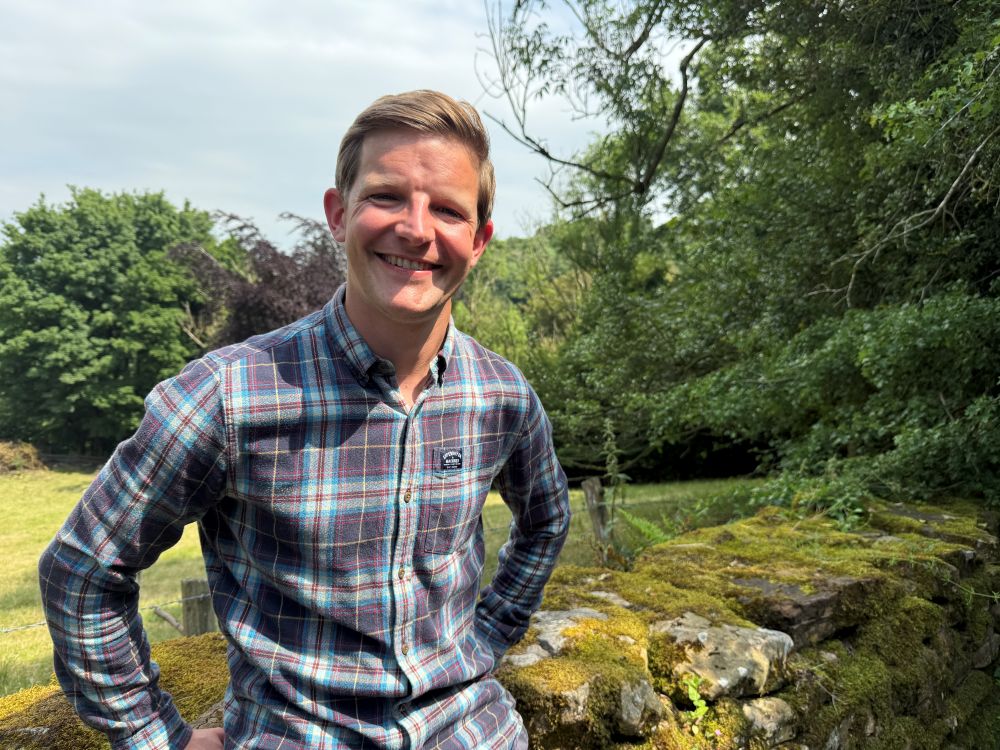
University of Cumbria’s course gives Henry the confidence to support commoners and navigate a changing policy landscape
Key outcome: Strengthened understanding of governance, regulations, and agri-environment schemes, enabling Henry to better support common land projects and commoners' associations.
"Understanding where we're up to with agri-environment schemes, what opportunities are available and how different schemes fit together means I can work more effectively on behalf of commoners."
As a freelance regenerative farming and food consultant, Henry's work brings together farming, facilitation and landscape-scale collaboration.
With a background in farming and community facilitation, he now supports a range of common land projects across the North West, helping groups build strong relationships, navigate governance structures and work towards shared goals.
When the opportunity arose to join the University of Cumbria's Collaborative Practices in Land Management short course, Henry saw it as a valuable chance to strengthen his knowledge and build confidence in an area that is constantly evolving.
Building knowledge for a changing sector
The course explores how collaborative approaches can help deliver multiple outcomes across rural landscapes, from nature recovery and livestock production to public access, archaeology and natural flood management. Combining online learning, workshops and site visits, participants learn from real-world examples and gain practical tools to support collaborative projects, with a particular focus on landscape recovery schemes, farmer clusters and common land.
Henry says:
"My world changes all the time. There's a requirement on me to know what's changed, what's changing and what's likely to come next."
While his work already involved supporting commons groups and collaborative projects, Henry wanted to deepen his understanding of the governance, policy and regulatory frameworks that underpin them.
"I tend to ask myself whether a course is meeting a gap in my knowledge right now. This one absolutely was."
Learning from real-world experience
One of the aspects Henry valued most was the course's blended approach to learning.
Delivered over six weeks, the programme combined online sessions with in-person workshops, farm visits and structured reflective exercises.
"The flexibility really suited me," he explains.
"It appeals to different ways of learning. I enjoyed that it mixed things up rather than being entirely online or entirely in person."
The face-to-face elements proved particularly valuable, giving participants the opportunity to learn from practitioners working at the heart of common land management and environmental projects.
A visit to Derwent Common was a standout experience.
"We chatted to a farmer speaking from an authentic place," says Henry. "He'd chaired a commoners' association for more than 20 years and had worked through multiple schemes with different stakeholders. Hearing what had worked, what hadn't worked, and seeing the nature regeneration work they had delivered on the ground was incredibly valuable."
During the in-person sessions the course also focussed on how collaborative approaches were being used to deliver environmental improvements, diversification opportunities and long-term land management goals.
The value of different perspectives
The course brought together a diverse group of participants, including Rangers, Land Agents, Farmers and others with an interest in place-based environmental projects.
"The cohort was really interesting," says Henry. "The value came from hearing a range of perspectives and different ways of looking at the same challenges."
The in-person sessions created opportunities to build meaningful connections, with several participants remaining in touch after the course ended.
Putting learning into practice
Since completing the programme, Henry has already put his learning into action.
The course strengthened his understanding of common land governance, regulations and agri-environment schemes, giving him greater confidence to support the groups and organisations he works with.
"It gave me the confidence around the governance and policy side of things," he says.
"Understanding where we're up to with agri-environment schemes, what's available to commons, how different schemes come together and the legal framework around common land has helped solidify my knowledge base."
That knowledge is already making a difference.
Since completing the course, Henry has been supporting a group establishing a commoners' association and has facilitated multiple meetings to help move the project forward.
"I've been able to act as a representative for a commons group on a much firmer foundation of understanding the regulations and the process of setting up a commoners' association."
Would Henry recommend the course?
For anyone involved in common land projects, the answer is a clear yes.
"If you're looking to improve your understanding of how to work effectively with common land projects, or you're interested in the governance and regulatory side of things, it's definitely worth signing up," he says.
"It's relevant for commoners, facilitators, land agents and anyone involved in supporting common land initiatives."
Alongside the learning, there was another benefit too.
"You get to spend time in nature, visit some of the most stunning landscapes in the country and learn from people with real-world experience. That makes a huge difference. We were also lucky to get incredible tea and cake - thanks to the brilliant bakers!"