{"available": "entirely", "availability": {"status": {"Recruiting Status 26/27":"RP 26/27","Recruiting Status 27/28":"RP 27/28","Recruiting Status 25/26":"RP 25/26"}, "dates": [{"name":"October 2026","month":"October","year":2026},{"name":"October 2027","month":"October","year":2027},{"name":"October 2025","month":"October","year":2025}]}}
Short course
-
Trees on Farms & Fells
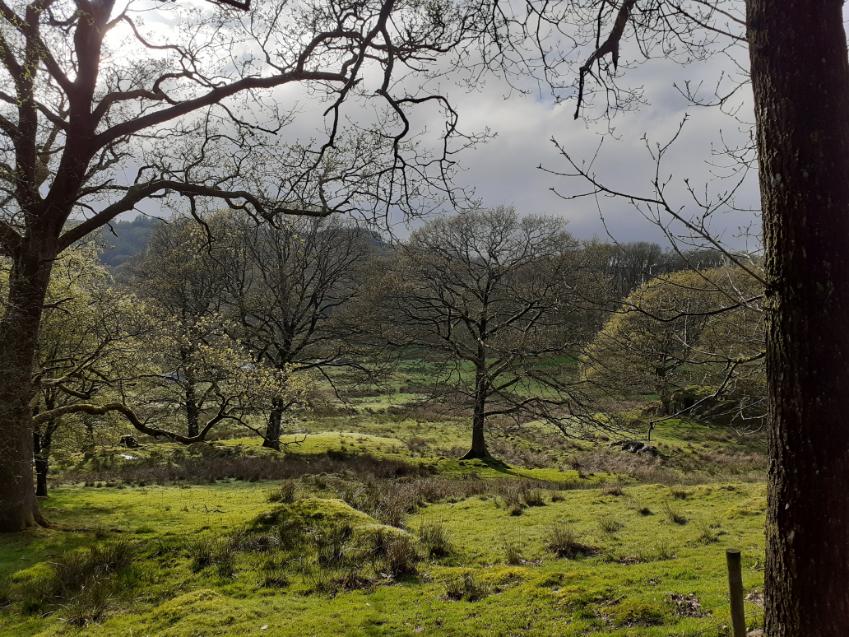
Trees on Farms & Fells, developed in partnership with the Forestry Commission, will develop your knowledge of the opportunities for integrating trees into agriculture on upland farms in England. Through site visits, workshops and online sessions, you will gain awareness of benefits, constraints, tree management, advice and funding options. You will gain the skills to produce a basic tree action plan for an upland farm.
The course has an applied focus and is designed for upland farmers, land managers and advisors. It can be studied separately or as part of our set of Upland Environmental Land Management short courses. Small group taught sessions will take place online, at our Ambleside campus and at upland locations in Cumbria.
The course will next run in Cumbria at our Ambleside campus w/c 12th October 2026: to apply for this course, please complete this application form.
This module introduces the benefits, trade-offs, options, constraints and processes involved in planned tree growth on England’s upland farms and fells. You will gain an overview of the types of tree planting and care which is possible, practical and justified in the uplands, in terms of environment, heritage and the farm business. You will consider principles and processes to make informed decisions and gain familiarity with key sources of information and advice to use in future. Guided visits to two upland farms and an upland common will demonstrate the principles and processes and provide opportunities for discussion. You will apply your skills to prepare a basic tree action plan for an upland farmed landscape of your choice.
The course includes site visits, workshops and seminars at our Ambleside campus, plus online evening lectures. This part-time course will often be possible to complete whilst working.
On this course you will...
Understand the range of benefits of trees on farms and fells in the English uplands.
Identify suitable funding options and key organisations to contact for advice and permissions, including for common land.
Gain an overview of relevant management strategies including planting schemes.
Understand constraints and trade-offs when changing the upland treescape, including practical, financial, environmental trade-offs and regulatory constraints.
Identifying opportunities for trees in the local upland farmed landscape.
Evaluate practical options ‘on the ground’ and create a justified action plan for trees on an upland farm.
Course Structure
What you will learn
You’ll first consider what we mean by trees on farms and fells: agroforestry, wood pasture, planting and regeneration, hedgerows, farming your trees and regenerative farming. We will explore the context in England: the ways things are changing in farm business, land use policy and agri-environment schemes.
You’ll learn about the broad range of benefits of trees on farms and fells. Via case studies, you’ll consider treescapes and planting schemes of different types and at various stages, how they have been planned and managed, and why they are assets. You'll explore the options for grant funding for trees on farms and fells, gain some awareness of the application processes and the implications of the various grant schemes. You will learn about constraints on planting trees: regulatory impacts and regulators, environmental constraints and cultural constraints. You’ll learn about identifying objectives of a scheme, what’s suitable where, the design of a planting scheme across a landscape, timescales, and environmental impact assessments. You’ll consider wood pasture, especially the opportunities for product quality and product story, profitability and improving soil quality. You’ll be equipped to prepare a basic tree action plan, applying your learning to a specific upland area in practice.
Teaching & Assessment
How you will learn
Tutor-led sessions will be a mix of in-person at our Ambleside campus and nearby upland sites plus online live sessions. Teaching and learning activities will include tutor presentations, small group discussions, supported digital skills workshops, farm tours and practical fieldwork activities.
This course emphasises application of skills and knowledge in the context of contemporary upland environmental land management.
You will also be expected to complete some independent study outside of taught sessions to prepare for the course and to consolidate, extend and reflect on your learning. We will provide support for your independent learning by recommending online resources and reading materials suited to your prior knowledge.
How you will be assessed
Your learning will be assessed through completion of a realistic task which allows you to demonstrate the core skills and knowledge from the course. The task involves preparing a basic tree action plan for your chosen upland area.
You will be awarded a certificate of completion at the end of the course.
Career Outcomes
Understanding the practical options for Trees on Farms and Fellscan help take your farm business forward orexpand your advisory role.
Overview
The module is suitable for people working in, or seeking to work in, upland farming, land management or advisory services.
There are no formal entry requirements but English and Mathematics at Level 2 (e.g. GCSE Grade C/4), and educational qualifications at Level 3 (e.g. A Level, NVQ level 3) or equivalent would be advantageous.
Fair Admissions
There are no formal qualifications required for the course, but we will consider relevant work experience to ensure the course is suitable for you.
Selection Criteria
The following technology skills are necessary for successful module completion:
Using word processing software (e.g. Microsoft Word)
Accessing websites and joining video calls online
Using new online tools or apps with guidance
Fees & Funding
Tuition Fees
UK Tuition fees
£550 Entry in 2025/26
£600 Entry in 2026/27
International Tuition fees
The figures above don't include accommodation and living costs.
Tuition fees are set annually and are subject to review each year. The University may therefore raise tuition fees in the second or subsequent years of a course, in line with inflation and/or the maximum permitted by law or Government policy. Students will be notified of any changes as soon as possible.
More Information
We have a wide range of scholarships, bursaries, grants and funds available to support you throughout your studies with us. This includes the Cumbria Bursary - a non-repayable bursary designed to support first year students with a household income of less than £25,000..
You should budget for stationery and consumables for personal use. These may include notebooks, pens and pencils, digital storage devices, printing and photocopying. The amount you spend will depend on your study preferences.
Books and journals
Approximately £50 to £300 over the course of your studies
Optional · Throughout the course · Books and journals
Most core textbooks and journals are available through the University library. You may choose to purchase personal copies of books or other resources used to support your studies.
Some courses recommend particular books or provide an estimated annual budget for purchasing personal copies. Search for your course below for details.
Technology requirements
Cost depends on the equipment and internet service you choose
Required · Throughout the course · Digital learning and IT
You will need regular access to a laptop or computer capable of accessing the internet and running software such as a word processor and Microsoft Teams. Microsoft 365 is provided as part of your studies. You will also need a reliable internet connection. The amount you spend will depend on the equipment and internet service you choose.
You'll need clothing and footwear suitable for walking in an upland environment in Cumbria, whatever the weather.
Equipment for online sessions
Cost depends on the equipment you already have
Required · Throughout the course · Digital learning and IT
Parts of this course are taught online, so as well as a laptop or computer you will need a webcam, microphone and speakers or headset, and an internet connection good enough for live video calls.
Travel to campus and site visits
Cost varies depending on where you travel from
Required · Throughout the course · Travel and accommodation
You will need to arrange and pay for your own travel to the Ambleside campus, in-person sessions and field or site visits.
Location
Ambleside Campus
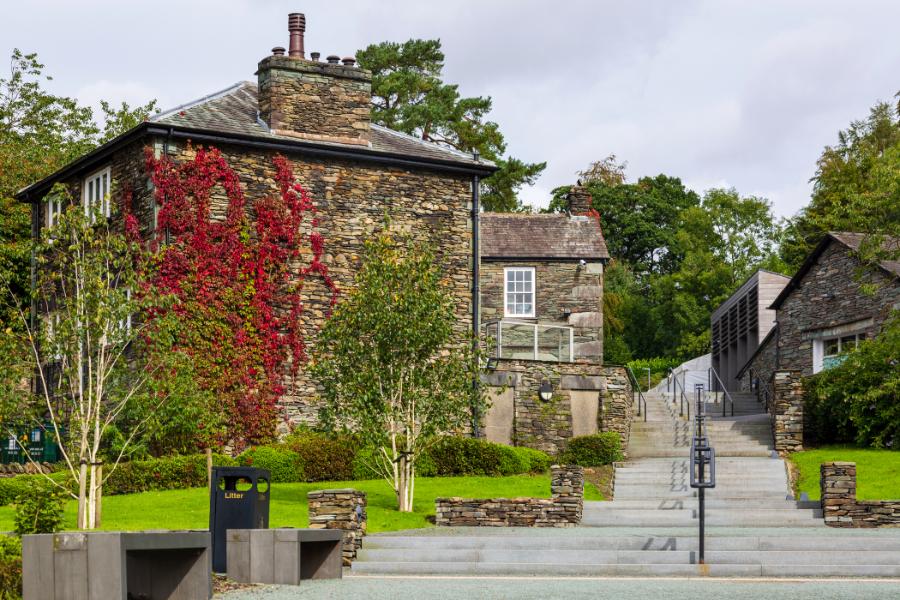
Nestled in the Lake District National Park, a UNESCO World Heritage site, the Ambleside campus is the perfect place for world-savers, animal lovers, and adventurers. There is never a dull moment when surrounded by such natural beauty and opportunity.
An Open Day is your opportunity to explore one of 5 campuses, meet your lecturers, and find out how the University of Cumbria could become your new home.