How you will learn
Key knowledge, understanding, and subject specific skills will be practised and developed through a wide range of teaching and learning methods including lectures, practical
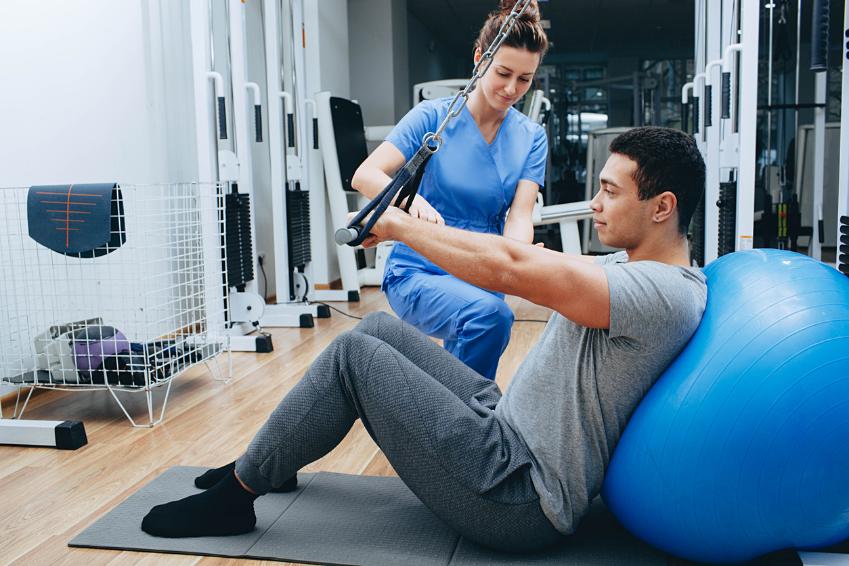
sessions, seminars, laboratory-based practical work, case studies, discussion, debates, small group work, seminar presentations, reflection, problem-based learning, vocational placement, independent study and research projects. Most of the theoretical work will be linked to practice, thus giving you the chance to apply this theory during practical sessions in the Sports Injury and Rehabilitation Clinic as well as in the Functional Rehabilitation and Strength and Conditioning Suite. Practical and analytical skills will be developed which can be used to apply as part of your applied practitioner project. Technology-enhanced learning will further support the practical learning with a range of software systems and online resources.
How you will be assessed
Modules use formative and summative assessment so that you can progress through a module in a structured and constructive way and build knowledge for practice in a
coherent and logical way. A varied diet of assessment methods will be utilised to prepare you for further academic study and professional practice, reflecting the multi-disciplinary nature of this programme and the increasing demand for employment ready graduates. Assessment methods are specified in each module guide and will include written assessments such as practical skills assessments, practical skills competencies, written reports, and projects, oral presentations, and research project. Learning and Teaching Assessment (LTA) approaches will be continually evaluated and improved by using module evaluations, student feedback, peer review of teaching, and module development sessions. These will ensure an enhanced student learning experience and continuing professional development of the academic team to maintain best-practice in Learning, Teaching and Assessment.
Career Outcomes
Graduate opportunities exist working in elite sport with sports performers or teams, or within private practice as a sport physiotherapy (please note that this is subject to
being registered with the CSP/HCPC). Alumni have sourced careers working in various elite sports environments, e.g., Liverpool FC, Crystal Palace FC, Blackburn Rovers FC, Morecambe FC, Carlisle United FC and across other sports including Rugby). Other opportunities for further development exist within the University CPD advanced practitioner framework of single, specialist modules.
Research
Research interests across the team include Sports Screening and Injury Prevention, Injury specific treatment protocols, Physiological adaptations and demands in football, Preseason testing to training demands in football, Talent development, Sport and Exercise Psychology, Sport and Exercise Physiology, Exercise and Health. Research is also undertaken in teaching and learning pedagogy, student experience and retention