{"available": "entirely", "availability": {"status": {"Recruiting Status 26/27":"RP 26/27","Recruiting Status 27/28":"RP 27/28","Recruiting Status 25/26":"RP 25/26"}, "dates": [{"name":"September 2026","month":"September","year":2026},{"name":"September 2027","month":"September","year":2027},{"name":"September 2025","month":"September","year":2025}]}}
LLB (Hons)
-
Law
Study at the North West's Top Law School (Guardian League Tables for Law 2025).
The rule of law has never been more important as it is today. Our modern Law degree will give you the skills and knowledge to navigate the English legal system and comparative legal frameworks, preparing you for a successful career in a rapidly changing environment.
You will be supported by experienced academics who draw on their diverse legal backgrounds to bring real-world insight and relevance to your studies. Their experience transpires in their teaching excellence – we are rated 1st in the UK for Student Satisfaction with Feedback (Guardian League Tables 2026).
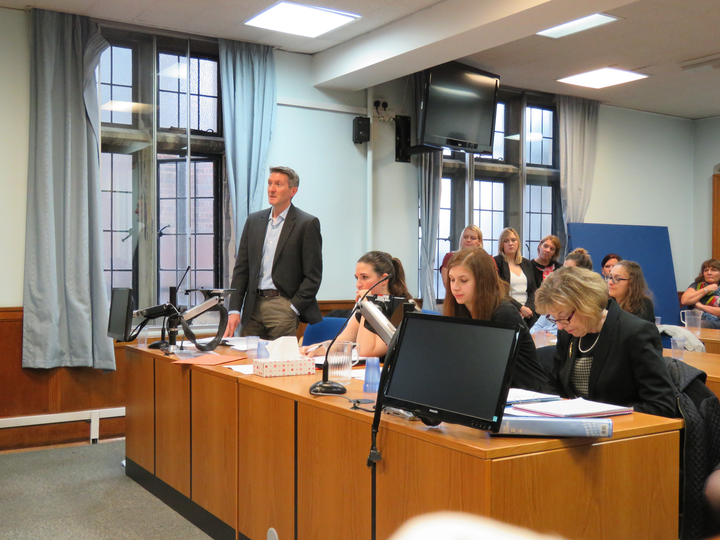
Learning is hands-on. You will participate in mock trials, negotiations and immersive simulations covering civil and criminal dimensions, while visits to courts and local law firms will prepare you for contemporary legal practice in the cyber environment.
Through our strong local and regional partnerships, you will gain opportunities for work placements, networking, and career development. You can also enhance your skills through national competitions, such as the Client Interviewing Competition, and engage with guest speakers from law firms, public bodies, and sector networks.
At Cumbria, you will enjoy a learning experience that is locally rooted, nationally connected, and globally relevant, turning knowledge into opportunity and providing a solid foundation for your legal career.
A law degree provides multiple transferable skills. This professionally recognised LLB (Hons) course offers an academically rigorous and career-focused legal education, designed to support your journey into the legal profession and many other careers.
You’ll study key areas such as Contract Law, Constitutional Law, Criminal Law and Equity & Trusts, while developing vital skills in legal research, client interviewing, and persuasive communication. Innovative modules like Lawyering in a Digital Age and Law in Action offer hands-on, real-world experience—including opportunities to work with local organisations on live legal issues.
With strong links to the local legal sector, engaging guest speakers, and opportunities for placements and visits, you’ll graduate confident, capable, and ready to make an impact.
As an award recognised by the Bar Standards Board, our degree supports your journey to becoming a barrister, while our collaboration with BARBRI can help you progress towards the Solicitors Qualifying Exams following graduation.
On this course you will...
Study at the top Law programme in the North West of England (Guardian, 2025).
Be offered opportunities to gain experience with His Majesty's Court Service, the Inns of Court in London and local employers.
Participate in professional and personal development activities including advocacy and confidence in public speaking training, mooting, and client interviewing.
Be supported in gaining work experience and making connections with local law firms and legal organisations.
Develop confidence in independent thinking, teamwork, research and writing.
I am proud to say, I now have my dream job and work as a County Court Advocate representing claimants or defendants in county courts throughout the North West.
Despite my earlier hang-ups about my academic ability, I will be leaving the University of Cumbria with a first-class degree, as winner of the Sweet & Maxwell Law Prize. I also received subject excellence and contribution to law awards along the way. Work-wise, I have finished my long stint in restaurant and bar work and I now work at Butterworths Solicitors as a Legal Adviser handling civil litigation claims.
The programme has been designed to provide a course of legal education that is academically rigorous, professionally relevant, research-informed and innovative.
We strive to empower our students through learning that is transformational using career-enhancing initiatives, experiential learning and reflective learning. Our excellent standard of student support and consideration of wellbeing is integral to the curriculum and is at the heart of our approach to teaching.
The programmes will assume no previous knowledge of law. Students will take part in an induction introducing key concepts in law and allowing them to build relationships and work together in teams.
*Note that optional modules will run subject to student numbers.
Year one
Legal Skills Start your journey into the world of law by learning and developing the fundamental skills which will help you become a successful legal professional. You will learn how to conduct legal research, using our on-campus and specialist online resources, how to interpret the law that you find and to then apply it to legal problems, identifying solutions and likely outcomes. You will begin your progression into reflective legal practice, too, by learning how document your reflective learning while embracing ethical and practical considerations.
Legal Systems This module will take students through the framework of English legal system and its many intricacies. By studying this module you will be able to critically assess a case's progression through both the civil and criminal courts. You will take a methodical approach to understanding the roles within the system and how these roles interact with the aforementioned cases.
Contract Law Understand the general principles of contract law.
Law of Torts Learn about how the law regulates relationships and behaviours without the criminal law, including the various legal duties owed under negligence (and its related torts) and the law regarding neighbour disputes and personal autonomy. You will take a practitioner-based approach to your studies, using online resources, specialist databases and real-life case studies to conduct practical legal research, case analyses, quantum valuations and on-going risk assessment of potential claims.
Constitutional Law Constitutional law is where law and politics meet. We will consider where power sits within the UK together with the sometimes challenging relationships between current and past governments, Parliament and the courts.
Persuasive Skills A practical module that tests your abilities of public speaking. You are guided through the process from start to finish; from the initial researching of the law to being able to confidently present legal arguments.
We look at different legal disciplines and apply the techniques and skills of persuasion and public speaking to a whole host of different scenarios.
A unique module where students are given the soft legal skills to apply the law they are learning, building student confidence and character throughout the module.
Year two
Lawyering and Dispute Resolution in a Digital Age Understand emerging digital trends in legal practice alongside undertaking a simulated legal case in a virtual law firm.In recognition of emerging trends and challenges of online delivery of legal services and A.I. The module aims to develop students’ attitudes to helping clients and society select and employ the most effective and just methods of dispute resolution. Practical experience is supported by theoretical underpinnings of the positive uses of technology, the risks to the profession and the ethical challenges posed by the use of technology in practice offering contemporary skills and understanding in lawyering in a digital age with a practical setting to undertake a lawyering project.
Criminal Law The criminal law is an ever evolving and technical area of the law. This module considers the criminal law in both its technical nature and how the principles which provide for offences and defences have evolved to the current day.
Land Law This module is intended to develop a practical knowledge of the fundamental principles relating to the acquisition and creation of rights in land, including opportunities to look at or consider those foundational concepts within context, i.e., a property transaction, identifying some legal issues which may be presented before them in a work-based scenario; issues arising in client-based work; and identifying the main stages in a typical sale/purchase of a freehold estate with registered title.
Equity and Trusts Equity and Trusts explores the origins, rationale, principles and operation of the legal sources relating to the English law of equity and the operation and formation of the trust. Equity is a form of remedial justice and this module examines the principles of equitable ownership of property and the functions and obligations of fiduciaries by applying the principles of equity and the law to practical scenarios to resolve legal issues.
EU Law EU Law is a subject rooted in the history and politics of Europe reaching back through the twentieth century. The EU can make laws and exercise powers that affect all individuals and organisations within its Member States. Whilst the UK left the EU in 2020 in the wake of the 2016 referendum, its membership comprises the majority of European countries. This course in EU Law will aim to provide you with a depth and breadth of understanding of the constitutional aspects of the EU, its various institutions and how they work together to make and enforce the law.
Law of Criminal Evidence (optional) This module considers the rules of evidence in criminal trials, in terms of the tests used to determine what is relevant and what is admissible. It also considers miscarriages of justice and issues such as eyewitness testimony, which led to the creation of the Criminal Division of Court of Appeal.
Human and Nature Rights (optional) An introduction to the concept of legal rights protection and the way in which human rights and the rights of nature are protected in the UK, under the European Convention of Human Rights and in other nations.
Family Law (optional) Family law can be a very challenging area of legal practice, often involving individuals facing considerable personal, financial and emotional upheavals. Learn about the systems of law which govern marriage, divorce, cohabitation and children, both in the public and private law arenas. In this optional module you will study and assess how the law operates to regulate the relationships between couples, children and the state.
Year three
Law Dissertation During the Law Dissertation module, you will be able to put your research and writing skills to great use in conducting sustained, in depth, and independent research in a legal topic of your choice. You will be able to extend your intellectual skills of argument, synthesis and critical analysis. You will be engaged with planning, researching, and writing your main dissertation piece over the whole of your final year. Usefully, the module also helps you continue to develop your self-management and independent study skills and competence as autonomous learners.
Business and Employment Law This module dives into the dynamic world of business and employment law, spotlighting key issues like the ever-relevant registered company limited by shares. It unpacks corporate governance, stakeholder roles, and the evolving landscape of corporate manslaughter laws alongside reform proposals. With a focus on corporate social responsibility, the module explores its regulation in other jurisdictions and potential adaptations for England & Wales. On the employment front, it sheds light on the core principles governing workplace relationships, essential contract formalities, and practical approaches to resolving disputes, offering a holistic view of these interconnected legal spheres.
Law in Action Do you want to use your developing legal skills to give back to the local community? In this module you will work in groups to do this by researching an area of law relevant to a local charity or similar organisation in order to support its work.
Medical Law and Ethics (optional) Gain a firm grounding in the principles of medical law and ethics, and its practical application in the practice of modern healthcare through your study of this optional module. Medical law is a fascinating subject which has necessarily developed rapidly in recent history in response to advances in medical science as well as changes in the social, cultural and political arenas. You will explore key issues including clinical negligence litigation, assisted dying, abortion, patient consent and medical confidentiality, and understand how these areas have been informed by developing ethical principles.
Human and Nature Rights (optional) In this module we will use national and international perspectives to consider how human rights protection works in practice and whether rights protection can be extended beyond humans, to other animals, or to nature.
Law Placement (optional) This optional module allows you to gain work experience with a legal service provider of your choice. Reflection on your experience forms the basis of your assessment.
Law of Criminal Evidence (optional) This module considers the rules of evidence in criminal trials, in terms of the tests used to determine what is relevant and what is admissible. It also considers miscarriages of justice and issues such as eyewitness testimony, which led to the creation of the Criminal Division of Court of Appeal.
Family Law (optional) An introduction to the laws governing marriage, divorce, cohabitation and children, both in the public and private law arenas.
Sustainable Development and the Law (optional) You will develop an understanding of the law relevant to sustainable development through an in-depth examination of domestic, European and international Law.
Teaching & Assessment
How you will learn
The law team will aim to support your development through the acquisition of academic knowledge and in the development of skills, values and attitudes. You will be supported in learning competencies such as collaborative and critical thinking as well as the ability to think independently and reflect on your progress.
How you will be assessed
LLB (hons) Law is delivered through a variety of methods. The delivery is designed to foster confident, self-reliant students, well placed to maximise their study. Assessed using a variety of methods which allow you to develop a range of skills and support your learning.
Learning approaches throughout the programme balance academic study and professional practice.
Case studies are used to create an environment to apply learning in authentic scenarios. Aquisition of knowledge and understanding through a combination of:
Lectures
Facilitated discussion and debate in seminars
Case studies
Guided reading and study
Simulation
Peer assisted learning
Interactive on-line and classroom based activities
Reflection on contemporary issues
Volunteering opportunities
Assessment is undertaken by a variety of methods which allow you to develop a range of skills and support your learning.
Timed Tests
Essays
Case study problem questions
Presentations
Academic Posters
Advocacy
Overview
104-120 UCAS tariff points. You can find out more about the tariff and qualification options from the UCAS tariff table. Offers are tailored to the individual applicant and their circumstances and can be across the tariff range. Applicants who meet our contextual information criteria will be offered at the bottom of the range.
Qualifications
Entry Requirements
A-levels: BCC - BBB
T-levels: M All subjects accepted for entry to this course
Access to HE: 21 Credits at Distinction & 24 at Merit
Scottish Highers: BBBC - AABB
Irish LC Highers: B1x2 B2, C1, A2x4
Alternative routes: If you don't think you'll meet the criteria for direct application to this course, check out our Integrated Foundation Year as an alternative route to this course.
Fair Admissions
When you apply, our Admissions specialists will review your whole application. We are looking for your potential to succeed so will assess your qualifications, any relevant work experience, your personal statement, and references.
Where you have received a conditional offer subject to achieving particular grades/UCAS tariff scores, and do not quite meet these scores, please try not to worry, where vacancies exist our Admissions specialists will review your whole application again and take account of any mitigating circumstances and reassess your suitability for the course.
Selection Criteria
As part of the application and selection process, we are looking for your commitment to this programme. In your personal statement, you should demonstrate your motivation for choosing this course and reflect upon any practical experience you have gained.
Contextual Admissions
Going to higher education can transform a person’s life. We use contextual admissions to make sure that we are accessible to everyone who has the potential to succeed. Qualifications and grades are important, but they are considered alongside other information that helps universities to identify potential and widen access to university level study. For some individuals, the disadvantages they have experienced in their life mean that they have not been able to demonstrate their full academic potential. Where a person lives and their personal circumstances can all affect their educational attainment.
We take this context into account and look for an applicant’s potential when making admission decisions. The University of Cumbria will make offers at the bottom of any UCAS Tariff range to applicants that live in postal code regions with the lowest participation in Higher Education (Polar 4 quintile 1 – you can check your postcode here), applicants that are estranged from their parents, are care leavers or have caring responsibilities or are in receipt of or received free school meals during their secondary education. Attendance at our Masterclasses and Summer Schools will also allow applicants to receive an offer lower within the tariff range. (T&Cs apply).
If you are over 21 and returning to study after being in relevant employment for a minimum of 3 years and do not meet the published entry requirements for Year 1 of our degree courses, please do not assume you are not qualified to join us. Our experienced Admissions and Academic staff will review your prior qualifications and professional experience to support your application.
Fees & Funding
Tuition Fees
UK Tuition fees
£9,535 Entry in academic year 2025/26
£9,790 Entry in academic year 2026/27
International Tuition fees
£14,900 Entry in academic year 2025/26
£16,000 Entry in academic year 2026/27
The figures above don't include accommodation and living costs.
Tuition fees are set annually and are subject to review each year. The University may therefore raise tuition fees in the second or subsequent years of a course, in line with inflation and/or the maximum permitted by law or Government policy. Students will be notified of any changes as soon as possible.
International Finance
At the University of Cumbria, we offer affordable tuition fees for international and EU students looking to study at one of our main four campuses. No matter your choice of course or career path, our International Team is here to support you.
We have a wide range of scholarships, bursaries, grants and funds available to support you throughout your studies with us. This includes the Cumbria Bursary - a non-repayable bursary designed to support first-year students with a household income of less than £25,000.
More Information
We have a wide range of scholarships, bursaries, grants and funds available to support you throughout your studies with us. This includes the Cumbria Bursary - a non-repayable bursary designed to support first year students with a household income of less than £25,000..
You should budget for stationery and consumables for personal use. These may include notebooks, pens and pencils, digital storage devices, printing and photocopying. The amount you spend will depend on your study preferences.
Books and journals
Approximately £50 to £300 over the course of your studies
Optional · Throughout the course · Books and journals
Most core textbooks and journals are available through the University library. You may choose to purchase personal copies of books or other resources used to support your studies.
Some courses recommend particular books or provide an estimated annual budget for purchasing personal copies. Search for your course below for details.
Technology requirements
Cost depends on the equipment and internet service you choose
Required · Throughout the course · Digital learning and IT
You will need regular access to a laptop or computer capable of accessing the internet and running software such as a word processor and Microsoft Teams. Microsoft 365 is provided as part of your studies. You will also need a reliable internet connection. The amount you spend will depend on the equipment and internet service you choose.
Recommended · Per year · Professional membership and registration
Membership of the Student Law Society is optional but recommended.
Annual Law Ball
Around £25
Optional · Per year · Other
You can choose to attend the annual Law Ball.
Trips to legal institutions
Subsidised rate; cost varies
Optional · Per trip · Field trips
Trips to law enforcement and legislative branches of the legal system outside Carlisle are offered at a subsidised travel and accommodation rate. Taking part is optional but recommended.
Textbooks
Approximately £175 to £200 a year
Recommended · Per year · Books and journals
We recommend that you buy your own copies of textbooks, which are updated each year to reflect changes in the law. As a guide: Year 1, about £35 per textbook across 5 modules; Year 2, about £30 per textbook across 6 modules; Year 3, about £40 per textbook across 5 modules.
Stay Focused. Go Far.
Location
Carlisle - Fusehill Street Campus
The Fusehill Street campus has been the setting of life-saving treatments since World War I. Now, it's home to world changers, life-savers, crime fighters, and entrepreneurs with access to high-quality facilities and innovative thinking.
An Open Day is your opportunity to explore one of 5 campuses, meet your lecturers, and find out how the University of Cumbria could become your new home.